
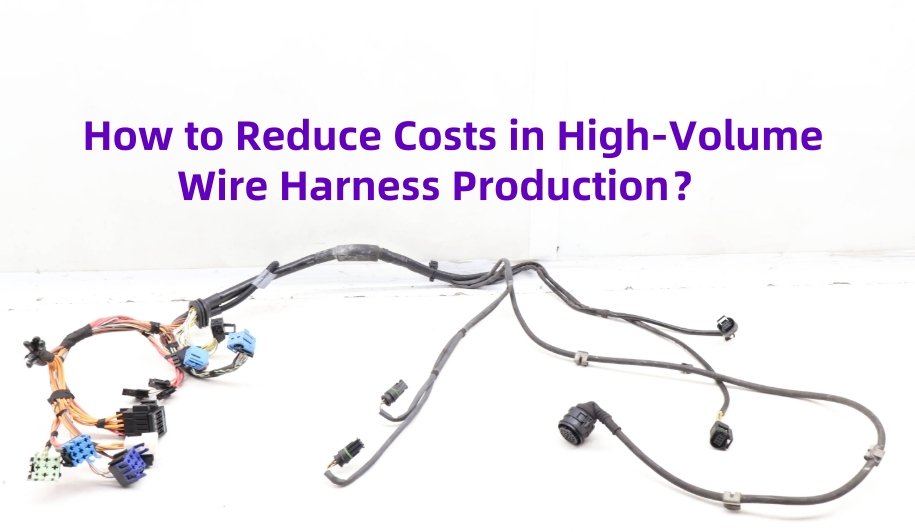
In my work, high volume wire harness production means manufacturing thousands or even millions of harnesses for industries such as automotive, appliances, renewable energy, and industrial equipment. At this scale, even a small cost difference per unit can add up to massive savings or losses over time.
I have seen companies struggle to stay competitive because their production costs were only a few cents too high per harness. In fast moving markets, cost efficiency can be the difference between winning a contract and losing it. Rising material prices, labor costs, and global supply chain challenges make the problem even more urgent.
The good news is that strategic choices in design, materials, and manufacturing processes can significantly reduce expenses without sacrificing quality or compliance. In this article, I will share proven approaches I have used at Yihetai to help our clients lower costs while maintaining the performance and reliability their applications require.
Understand Your True Cost Drivers
Before you can effectively reduce costs in high volume wire harness production, you need to clearly understand where those costs are coming from. Identifying and analyzing the main cost drivers allows you to focus your improvement efforts where they will have the greatest impact.
Material Costs
Materials are often the largest portion of total production expenses. This includes wires, connectors, jackets, and shielding. The choice of materials affects not only the price but also performance, durability, and compliance with industry standards. Bulk purchasing, alternative materials, and optimized specifications can lower these costs.
Labor and Assembly Time
Every manual step in cutting, crimping, and assembling adds labor costs. Streamlining workflows, introducing automation, and improving training can significantly reduce assembly time without sacrificing quality.
Testing and Quality Control Expenses
Rigorous testing is essential, but inefficient processes can increase costs. Using advanced testing equipment and in-process checks can cut test times and reduce rework.
Logistics and Packaging
Shipping heavy or bulky harnesses, especially internationally, can be expensive. Efficient packaging design and consolidated shipments can reduce logistics costs while still protecting the product during transit.
Scrap and Rework Rates
Even in highly efficient factories, scrap and rework can quietly increase total production costs. Incorrect wire lengths, terminal crimp defects, misrouting, or labeling errors may seem minor on a single unit, but in high volume wire harness production they can result in significant material waste and lost labor hours. Tracking defect patterns at each stage of production helps identify the root causes early and reduces repeated mistakes.
By improving work instructions, using error-proof fixtures, and monitoring process data in real time, manufacturers can lower scrap rates and reduce the need for rework. This not only saves material and labor costs, but also protects delivery schedules and improves overall production efficiency.
1.Optimize Harness Design
One of the most effective ways to reduce costs in high volume wire harness production is to focus on design before manufacturing begins. The design stage is where small adjustments can lead to major savings in materials, labor, and production time. Working closely with engineers early in the process ensures that the harness is optimized for both performance and cost efficiency.
Importance of Early Design Collaboration with Engineers
Involving engineering experts at the beginning allows you to identify potential cost issues before they become expensive changes during production. Engineers can recommend alternative materials, routing methods, or assembly techniques that reduce complexity without compromising quality.
Simplifying Layouts to Reduce Assembly Time
A cleaner, more direct harness layout means fewer bends, junctions, and connection points. This not only cuts assembly time but also minimizes opportunities for error, resulting in higher productivity and lower labor costs.
Standardizing Wire Lengths, Connectors, and Components
Where possible, use the same wire gauges, connector types, and component specifications across different harness designs. Standardization enables bulk purchasing, simplifies inventory management, and allows production teams to work more efficiently with fewer changeovers.

2.Choose Cost-Effective Materials Without Compromising Quality
Material selection has a direct impact on both the performance and the total cost of a wire harness. Choosing wisely means finding the right balance between meeting technical requirements and keeping expenses under control.
Balancing Performance Needs with Material Costs
Start by defining the environmental, electrical, and mechanical requirements of the harness. Then select materials that meet those needs without exceeding them. Over-specifying materials can lead to unnecessary cost increases, while under-specifying can compromise reliability.
When to Use PVC vs TPE Jackets for Different Applications
PVC jackets are a cost-effective choice for indoor or standard condition applications such as household appliances or industrial equipment. TPE jackets, while more expensive, are ideal for environments that demand high flexibility, UV resistance, or extreme temperature tolerance, such as renewable energy systems and outdoor installations.
Leveraging In-House Material Development to Control Costs and Maintain Quality
By developing and processing materials in-house, manufacturers like Yihetai can control quality at every stage, reduce dependency on external suppliers, and optimize formulations to deliver both performance and cost efficiency.
3.Streamline Manufacturing Processes
Once the harness design and materials are optimized, the next step in reducing costs is to make the manufacturing process as efficient as possible. Streamlining production not only lowers expenses but also improves consistency and turnaround times.
Implementing Lean Manufacturing Principles
Adopting lean manufacturing methods helps eliminate waste, improve workflow, and ensure resources are used effectively. This includes organizing workstations, reducing unnecessary movement, and continuously reviewing processes for improvement.
Automation for Cutting, Crimping, and Testing
Automated machines can perform repetitive tasks such as wire cutting, terminal crimping, and continuity testing with greater speed and accuracy than manual methods. This reduces labor costs, shortens lead times, and improves product uniformity.
Standardizing Wire Lengths, Connectors, and Components
When I work on high volume wire harness projects, I always look at manufacturability as early as possible. A harness may perform well on paper, but if it is difficult to cut, route, crimp, or secure during production, the real cost quickly rises. Design for manufacturability helps reduce unnecessary steps, lowers scrap rates, and makes assembly more consistent across large production runs.
Simple adjustments such as improving branch layout, reducing crossover points, selecting easier-to-process terminals, and allowing enough space for assembly tools can make a measurable difference. These changes help operators work faster and reduce the risk of wiring mistakes, damaged insulation, or repeated rework. In high volume production, a design that is easier to build is often just as important as a design that meets the electrical specification.
Batch Processing to Maximize Efficiency in Large Orders
Producing harnesses in batches allows for better use of equipment and labor, minimizes setup changes, and increases throughput. For high volume orders, this approach can significantly lower per-unit costs while maintaining quality.
Reduce Scrap Through Better Process Control
In high volume wire harness production, scrap can quietly become a major hidden cost. Small losses in wire length, terminal damage, incorrect crimping, or assembly mistakes may seem minor in a single batch, but across thousands of units they can significantly increase material waste and labor expenses. This is why tight process control is essential in large scale production.
I always recommend using standardized work instructions, real-time in-process inspections, and clear defect tracking systems to reduce scrap rates. When production teams can quickly identify where waste is happening, they can correct the issue before it affects an entire order. Lower scrap means better material utilization, fewer production interruptions, and a lower cost per harness.

4.Leverage Supplier Relationships
In high volume wire harness production, strong supplier partnerships are just as important as efficient in-house processes. The right suppliers can help reduce material costs, improve quality, and ensure a steady flow of components, all of which directly impact profitability. Building and maintaining these relationships is a strategic way to lower costs without compromising performance.
Benefits of Working with Established OEM Suppliers like Yihetai
Partnering with an experienced OEM supplier means gaining access to proven engineering expertise, consistent quality control, and the ability to customize harnesses to exact specifications. A supplier with decades of experience understands how to balance cost efficiency with industry compliance.
Volume-Based Pricing Agreements
By committing to larger or repeat orders, buyers can negotiate better unit pricing on wires, connectors, and other components. This approach leverages economies of scale, making each harness more cost-effective in high volume runs.
Reliable Supply Chains to Prevent Costly Delays
An established supplier with robust sourcing and logistics systems can secure materials in advance, manage inventory effectively, and prevent delays caused by shortages. Reliable delivery schedules keep production lines running smoothly and avoid the high costs of unplanned downtime.
Better Forecasting and Inventory Planning Can Lower Total Cost
Another effective way to reduce costs is to improve demand forecasting and inventory planning. In my experience, poor planning often leads to rush purchasing, excess stock, or production interruptions caused by missing components. All of these issues increase the total cost of wire harness production, even when the unit material price looks acceptable at first.
By sharing realistic forecasts with suppliers and planning safety stock for critical components, manufacturers can stabilize material flow and avoid emergency sourcing. This also makes it easier to schedule labor, reduce changeovers, and keep production lines running efficiently. For high volume programs, good inventory planning is not just a supply chain task. It is a practical cost control strategy
5.Focus on Quality to Avoid Rework Costs
Reducing costs in high volume wire harness production is not just about speeding up processes or lowering material prices. Quality plays a direct role in cost control, because defects, rework, and warranty claims can quickly erode any savings gained elsewhere. By making quality assurance a priority from the start, you can avoid the high expense of fixing problems after production.
100% Testing to Catch Defects Before Shipment
Every harness should go through complete electrical and visual inspection before leaving the factory. Functional tests such as continuity, insulation resistance, and pull-strength checks ensure that any defective units are identified and corrected before they reach the customer.
Compliance with ISO, UL, and IATF16949 to Ensure Consistency
Working within internationally recognized standards guarantees that harnesses meet strict performance and safety criteria. Consistency across every production batch builds trust and reduces the likelihood of costly field failures.
How Preventing Failures Reduces Long-Term Costs
When a product fails in the field, the expenses include not only repairs or replacements but also shipping, labor, and potential damage to customer relationships. By investing in robust quality control, these risks are minimized, leading to stronger profitability over the long term.
6.Plan for Scalability and Future Demand
Cost reduction in high volume wire harness production is most effective when it is sustainable over time. Planning for scalability means thinking beyond current orders and preparing for future product changes and market growth. By designing with flexibility and building production capacity ahead of demand, you can avoid costly redesigns and rushed expansions later.
Designing Harnesses That Are Easy to Modify for Future Product Lines
When possible, use modular designs, standardized connectors, and common wire specifications so harnesses can be adapted for new product versions with minimal changes. This approach reduces engineering time and prevents the need for complete redesigns when product updates occur.
Building Production Capacity for Expected Growth
Forecasting demand and investing in scalable production equipment allows you to increase output quickly without sacrificing quality. This may include adding automated assembly lines, expanding skilled labor teams, or securing long-term supplier agreements to handle larger material volumes when orders increase.
Use Data to Continuously Improve Cost Efficiency
Scalability is not only about adding more machines or labor. It also depends on how well you use production data to improve decision making over time. In high volume wire harness manufacturing, tracking key metrics such as cycle time, defect rate, labor efficiency, material usage, and on-time delivery can reveal where costs are increasing and where improvements can be made.
At Yihetai, I believe data driven improvement is one of the most practical ways to stay competitive in large scale production. When you regularly review production performance, you can make faster adjustments to workflows, supplier planning, and quality control methods. This creates a more stable manufacturing system that can grow efficiently while keeping costs under control.

Conclusion
From my experience, the most effective way to reduce costs in high volume wire harness production is to focus on three core areas. Smart design choices help eliminate waste and simplify assembly. Efficient manufacturing processes ensure consistent quality while saving time and labor. Strong partnerships with reliable suppliers secure competitive pricing and prevent costly delays.
At Yihetai, I work closely with customers to review every stage of their production and identify opportunities for savings without sacrificing performance or compliance. Whether it is refining a design, selecting the most cost effective materials, or streamlining the manufacturing flow, my goal is always to deliver the best value for your investment.
If you are looking to lower your production costs while maintaining high standards, contact me today. Let us carry out a tailored high volume production cost review and create a solution that fits your needs perfectly.
Read more: How to Reduce Costs in High-Volume Wire Harness Production?Related Wire Harness Articles:
- How to Design a Custom Wire Harness for Harsh Environments?
- How to Choose the Right Wire Harness for Industrial IoT Applications?
- What Is Overmolding Cable Assemblies and How to Know When to Use It Effectively?
- How to Choose Between Metal and Plastic Connector Housings for Your Cable Assembly Needs?
- Choosing the Right JST Cable Assembly for Your Application: A Complete Guide