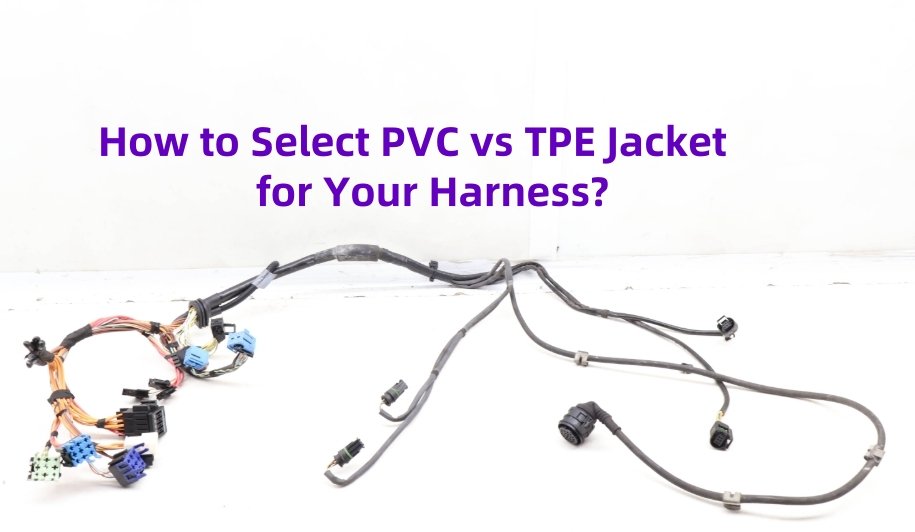
When I work with customers on their wire harness projects, one question always comes up: “Which jacket material should I choose?” The jacket is more than just a cover. It is the shield that protects your wires from heat, cold, moisture, chemicals, and wear. Choosing the wrong material can lead to early failure, costly downtime, and unnecessary replacements.
I have seen harnesses crack in the cold because the material was not flexible enough, or degrade outdoors because it could not resist UV light. Temperature, flexibility, durability, and cost all play an important role, and there is no single answer that works for every application.
That is where my team at Yihetai comes in. With over 23 years of manufacturing experience and certifications such as ISO9001, UL, and IATF16949, we design PVC and TPE harness jackets to match exact application needs. In this post I will help you make the right choice the first time.
What is a Harness Jacket and Why It Important?
To understand how to select the right jacket for your harness, it’s important first to grasp what a harness jacket is and why it plays a critical role in harness performance and durability.
A harness jacket is essentially the outer protective layer that encases the wires and conductors within a cable harness. It serves as the first line of defense against the many mechanical and environmental stresses that cables face during operation.
The jacket is the external sheath or coating covering the internal insulated wires and conductors of the harness. Its material composition varies depending on the requirements of the specific application and environment. Common materials for jackets include PVC (Polyvinyl Chloride) and TPE (Thermoplastic Elastomer), both chosen for their protective qualities.
Functions of a Harness Jacket
- Automotive Harnesses: In vehicles, harness jackets must contend with heat, vibrations, oils, and exposure to chemicals. PVC jackets are widely used for their good durability and cost-effectiveness, while TPE jackets are favored where flexibility and higher temperature resistance are required.
- Renewable Energy Harnesses: Solar or wind power installations expose harnesses to extreme weather, UV light, and chemicals, requiring jackets with excellent environmental resistance. TPE is often chosen for dynamic outdoor applications here due to its resilience.
- Medical Harnesses: In medical devices, harness jackets need to be flexible, biocompatible, and resistant to cleaning agents. TPE jackets provide the flexibility and durability required in sensitive medical environments.
What is PVC (Polyvinyl Chloride) and PVC Jackets?
Before deciding on the best jacket material for your harness, it’s important to understand the properties and characteristics of one of the most widely used materials: PVC.
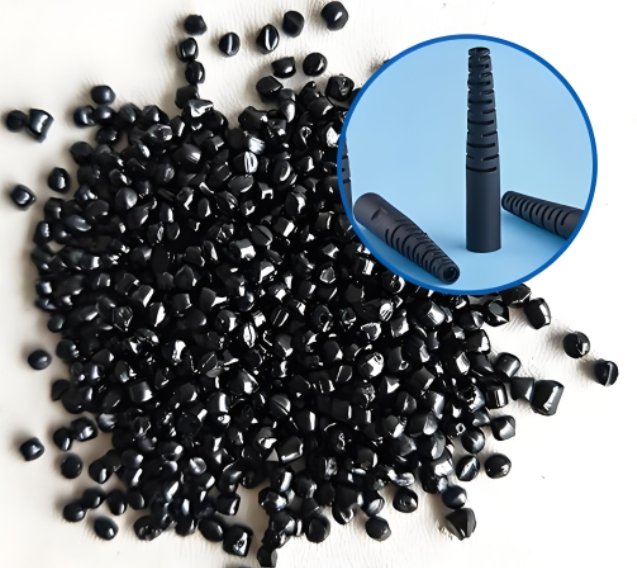
Polyvinyl Chloride (PVC) is a commonly used thermoplastic polymer known for its versatility and cost-effectiveness. It forms a durable outer jacket that protects wiring harnesses in many types of applications.
PVC is a plastic polymer with strong mechanical and chemical resistance properties. It can be produced in rigid or flexible forms, with the flexible type softened using plasticizers. PVC jackets are known for being lightweight, tough, and abrasion-resistant. They also provide good electrical insulation and moisture resistance.
Advantages of PVC Jackets
- Cost-effectiveness: PVC is one of the most economical jacket materials, making it popular for large-scale or cost-sensitive applications.
- Good moisture resistance: It effectively prevents water ingress, protecting internal wiring from corrosion.
- Durability and resistance: PVC jackets withstand exposure to oils, acids, abrasion, and sunlight, ensuring long service life in harsh conditions.
- Flame-retardant: PVC inherently resists ignition due to its chlorine content, self-extinguishing once the flame source is removed.
Common Applications for PVC Jackets
PVC jackets are widely used in automotive wiring harnesses, household appliance cords, industrial machinery, and some medical device harnesses where economic and durable protection is required.
Limitations of PVC Jackets
- Limited flexibility at low temperatures: PVC can become rigid and less flexible in cold environments, risking cracks or damage during bending.
- Fire safety concerns: When burned, PVC releases harmful chlorine-based gases which are toxic and corrosive.
- Moderate flame resistance: While self-extinguishing, PVC does not perform as well as some other materials (like TPE) in demanding fire safety applications.
What is TPE (Thermoplastic Elastomer) and TPE Jackets?
When considering cable jackets for your harness, understanding Thermoplastic Elastomers (TPE) and their characteristics is crucial since TPE jackets offer distinct benefits that differ significantly from other materials like PVC.
Thermoplastic Elastomers (TPE) are polymer materials that combine the elasticity of rubber with the processability of thermoplastics. Unlike traditional vulcanized rubber, TPEs can be melted and reshaped multiple times without losing their elastic properties, making them recyclable and easier to manufacture. They exhibit both flexible, rubber-like behavior and good mechanical strength across a broad temperature range.
Advantages of TPE Jackets
- Exceptional Flexibility: TPE jackets maintain excellent flexibility even under extreme cold conditions, typically ranging from -50°C to 125°C, which helps prevent cracking or stiffness in harsh environments.
- Durability: They offer high resistance to abrasion, UV radiation, ozone, and many chemicals, ensuring long-term performance in demanding outdoor and industrial settings.
- Superior Flame Resistance: Compared to PVC, TPE jackets generally possess better flame retardant properties without releasing harmful chlorine-based gases.
- High Flex Life: TPE jackets can endure millions of bending and flexing cycles (up to 10 million), making them ideal for dynamic applications where movement and repeated flexing occur.
- Recyclable and Non-Toxic: Their thermoplastic nature allows TPE materials to be recyclable, and they are considered safer for the environment and human health due to the absence of toxic additives.
Common Applications Favoring TPE Jackets
TPE jackets are favored in applications requiring high flexibility, durability, and environmental resistance such as automotive engine harnesses, renewable energy cables exposed to outdoor elements, medical device wiring, and robotics where cables need to flex repeatedly without failure.
Considerations
Higher Cost: Compared to PVC, TPE jackets tend to be more expensive due to their advanced material properties and manufacturing processes.
Possible Over-specification: For simple, static, or cost-sensitive applications, TPE’s superior performance may be unnecessary, making PVC a more economical choice.
Comparison Table: PVC vs TPE Jackets
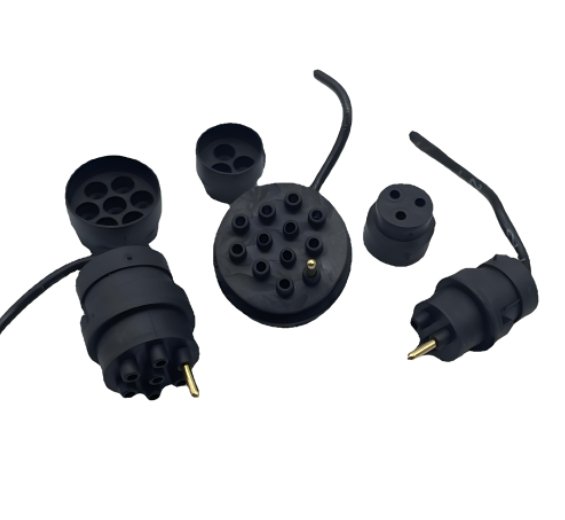
After understanding the individual characteristics of PVC and TPE, the next step is to see how they perform side by side. A direct comparison helps clarify which jacket material is best suited for specific harness applications, taking into account cost, flexibility, durability, environmental performance, and regulatory requirements.
Here is a detailed comparison table that highlights the key differences and features of PVC vs TPE jackets:
| Property / Feature | PVC (Polyvinyl Chloride) | TPE (Thermoplastic Elastomer) |
| Flexibility | Moderate flexibility; becomes stiff in cold temperatures | Exceptional flexibility, remains flexible from -50℃to 125℃ |
| Temperature Range | -20℃ to 80℃ | wide range: -50℃ to 125℃ |
| Abrasion Resistance | Good | Excellent |
| UV and Ozone Resistance | Moderate; degradation possible with prolonged exposure | High resistance to UV, ozone, and sunlight |
| Chemical Resistance | Good resistance to oils, acids, and moisture | Excellent resistance to chemicals and oils |
| Flame Resistance | Moderate; self-extinguishing but releases harmful chlorine gases when burned | Superior flame resistance; halogen-free and less toxic smoke |
| Durability | Durable and resistant to wear and tear | Highly durable with high flex life (up to 10 million flex cycles) |
| Environmental Impact | Less recyclable, releases chlorine compounds | Recyclable and non-toxic |
| Cost | Lower cost, economical choice | Higher cost due to advanced properties |
| Typical Applications | General-purpose wiring, household appliances, automotive interiors | Dynamic and harsh environments, medical devices, robotics, renewable energy |
What Are The Key Factors In Choosing Between PVC And TPE?
Choosing between PVC and TPE jackets for your harness depends on several key factors that relate to the application environment, performance requirements, and budget. Understanding these factors will help you make an informed decision for optimal cable durability and functionality.
Below 6Keys Factors in Choosing Between PVC and TPE Jackets for your reference:
1.Environmental Conditions
Consider temperature extremes, exposure to UV light, ozone, chemicals, oils, moisture, and abrasion. TPE excels in harsh environments with extreme cold (-50°C) and high UV or chemical exposure, while PVC suits moderate environments better.
2.Flexibility and Movement
If the harness cables undergo frequent bending, flexing, or dynamic movement, TPE is preferable for its exceptional flexibility and high flex life (up to 10 million cycles). PVC is more rigid and better for static or minimal movement applications.
3.Flame and Safety Requirements
TPE offers superior flame resistance and does not release harmful chlorine-based gases when burned, making it safer in fire situations. PVC has moderate flame resistance but emits toxic gases.
4.Cost Considerations
PVC is generally more cost-effective and widely available, ideal for budget-sensitive projects. TPE, being a premium material, comes at a higher cost but offers advanced performance features.
5.Application-Specific Needs
For indoor, general-purpose, or less demanding applications, PVC is often adequate. For outdoor, medical, automotive, renewable energy, or food and pharmaceutical industries requiring high flexibility, chemical resistance, and environmental sustainability, TPE is the better option.
6.Durability and Longevity
TPE provides higher abrasion resistance and longer lifespan under harsh conditions compared to PVC, potentially reducing maintenance and replacement costs over time.
Conclusion & Recommendatio
Choosing the right jacket material for your harness is a critical decision that directly impacts the performance, safety, and longevity of your cable assembly. By understanding the distinct attributes of PVC and TPE jackets, you can better match your application’s specific needs to the appropriate material.
The key differences between PVC and TPE jackets lie in flexibility, environmental resistance, flame safety, durability, and cost. PVC is a cost-effective choice with good moisture resistance and durability, suitable for general-purpose, static, or indoor applications where budget is a priority. Conversely, TPE offers superior flexibility across a wider temperature range, outstanding resistance to abrasion, UV, chemicals, and flame, making it ideal for demanding environments requiring dynamic movement, safety, and environmental sustainability.
For applications with tight budgets or less severe operating conditions, PVC jackets are a smart and reliable choice. For projects involving harsh environments, frequent flexing, or eco-conscious standards, TPE jackets provide enhanced performance and peace of mind.
If you’re unsure which jacket material best fits your harness requirements, Yihetai offers expert consultation and custom harness design services. Their rigorous 100% product testing and tailored manufacturing ensure you receive a harness with the optimal jacket material for your application, maximizing reliability and value. Reach out to Yihetai to get started on your next high-quality harness solution.
RFQ:
Q1.Which jacket material is better for automotive wiring harnesses?
A:For automotive wiring harnesses, the choice between PVC and TPE jacket materials depends on the specific requirements of the vehicle application.
PVC jackets are widely used in automotive wiring due to their cost-effectiveness, good moisture resistance, durability, and resistance to oils, acids, abrasion, and sunlight. They perform well under typical automotive conditions and offer reliable protection where flexibility needs are moderate. However, PVC can become less flexible at low temperatures and releases harmful chlorine-based gases if burned, which are considerations for safety and extreme environments.
TPE jackets, on the other hand, offer superior flexibility across a broader temperature range (-50°C to 125°C), outstanding abrasion resistance, UV and ozone resistance, and better flame-retardant properties without toxic halogen gases. Their high flex life makes them particularly suited for areas of the vehicle where cables experience frequent movement or flexing, such as in doors or engine compartments subjected to vibration and temperature extremes.
Q2.Which jacket is better for high-flex applications like robotics or moving equipment?
A:For high-flex applications such as robotics and moving equipment, the ideal jacket material must offer exceptional flexibility, durability, and resistance to mechanical and environmental stresses.
Among common jacket materials, Thermoplastic Elastomer (TPE) stands out as the best choice for these demanding uses. TPE jackets maintain exceptional flexibility even in extreme cold (down to -50°C) and high temperatures (up to 125°C), and they support a very high flex life—up to 10 million cycles—making them highly resistant to fatigue from continuous bending and movement.
TPE also offers excellent abrasion resistance and strong protection against UV radiation, ozone, and chemicals, which further extends cable life in industrial environments. Its superior flame resistance and non-toxic burn properties add to its safety advantages over many other materials.
In comparison, PVC jackets have moderate flexibility and are more prone to becoming brittle at low temperatures, making them less suitable for applications involving continuous motion and flexing.
Therefore, for applications involving robotics, automated machinery, or any equipment requiring constant cable movement and flexing, TPE jackets are generally the better material due to their advanced flexibility, durability, and safety performance.
Q3.Can both PVC and TPE jackets be made to meet UL or IATF16949 standards?
A:Yes, both PVC and TPE jackets can be manufactured to meet UL (Underwriters Laboratories) and IATF 16949 standards, but achieving compliance depends on the specific formulations and construction of the cable jackets and the intended application requirements.
UL Certification: UL certification involves rigorous testing to ensure safety, electrical performance, flame resistance, and environmental durability. Both PVC and TPE compounds used for jackets can be specially formulated and tested to pass UL standards relevant to cable safety, flammability, moisture resistance, and temperature ratings. It is common to find UL-listed cables with either PVC or TPE jackets, provided they meet the necessary criteria.
IATF 16949 Certification: IATF 16949 is a quality management standard specific to the automotive industry. It governs the production processes and quality assurance systems rather than the material itself. Manufacturers producing PVC or TPE jacketed automotive harnesses can comply with IATF 16949 by adhering to strict quality and process controls throughout design, manufacturing, and testing phases.
Q4.Which industries typically use PVC jackets for wire harnesses?
A:PVC jackets for wire harnesses are widely used across a variety of industries due to their cost-effectiveness, durability, and resistance to moisture, oils, acids, abrasion, sunlight, and saltwater. Typical industries that utilize PVC jackets include:
- Home Appliances: Reliable for indoor environments with moderate flexibility and durability needs.
- Automotive: Common for general wiring harnesses where budget and good overall protection are priorities.
- General Industrial and Automation: Used in control cables, packaging machinery, and general automation applications that require chemical and abrasion resistance.
- Lighting: Suitable for cables in street lighting and direct burial applications because of its durability.
- Food and Beverage: PVC jackets are often compliant with hygiene standards and offer necessary protection in packaging and processing equipment.
Q5.In what applications is TPE preferred over PVC?
A:TPE (Thermoplastic Elastomer) is preferred over PVC in applications that demand high flexibility, durability, and environmental resistance. Specifically, TPE is chosen when:
High Flexibility is Required: TPE maintains excellent flexibility even in extreme cold temperatures (down to -50°C), making it ideal for applications with frequent bending, flexing, or movement such as robotics, conveyor systems, and moving machinery.
Harsh Environmental Conditions: TPE offers superior resistance to abrasion, UV radiation, ozone, and chemicals, suitable for outdoor and industrial environments exposed to sunlight, oils, acids, and chemicals.
Enhanced Flame Resistance and Safety: TPE is generally halogen-free and flame-retardant without releasing toxic gases, making it suitable for applications with stringent fire safety regulations.
Long Flex Life: TPE cables can endure millions of bending cycles, ensuring longer service life in dynamic applications.
Eco-friendly and Non-toxic Needs: TPE is recyclable and considered safer for both users and the environment, preferred in medical, consumer, and food industry applications.
Q6.Why is TPE often preferred for medical or healthcare equipment wiring?
A:TPE (Thermoplastic Elastomer) is often preferred for medical or healthcare equipment wiring due to several critical advantages aligned with the demands of this highly sensitive industry:
- Biocompatibility and Safety: Medical-grade TPE is non-toxic, free of harmful additives like plasticizers or heavy metals, and compliant with stringent medical material standards. It does not absorb or react with drugs or body fluids, ensuring patient safety and treatment accuracy.
- Soft and Flexible Texture: TPE’s soft, smooth, and cushioning surface makes it gentle on human skin, ideal for wearable or body-contact devices. Its high flexibility also supports complex device designs with tight bending requirements.
- Durability Under Harsh Conditions: TPE withstands repeated sterilization, exposure to chemicals, high temperatures, and harsh environments without degradation. This resilience ensures reliability and long device lifespan.
- Environmental and Processing Benefits: TPE is recyclable and burns cleanly, producing only carbon dioxide and water. Its processing is simpler and more cost-effective compared to materials like silicone rubber, supporting scalable production.
- High Precision and Signal Integrity: In medical devices requiring precise signal transmission (e.g., diagnostic and surgical tools), TPE jackets provide excellent insulation and electromagnetic compatibility.
- Compliance with Medical Standards: TPE materials often comply with international medical standards (such as GB14233.1 and GB16886.1), further ensuring safety and suitability for critical healthcare applications.
Q7.Which jacket material works best for renewable energy systems like solar panels?
A:For renewable energy systems like solar panels, the best jacket materials are those that provide excellent resistance to harsh outdoor conditions, including prolonged UV exposure, moisture, temperature extremes, and mechanical wear.
Materials commonly preferred for solar cable jackets include:
Thermoplastic Elastomers (TPE): TPE jackets offer outstanding UV resistance, flexibility over wide temperature ranges, and strong resistance to abrasion, chemicals, and moisture. These properties help maintain cable integrity and performance in challenging outdoor environments typical of solar installations.
Cross-Linked Polyethylene (XLPE): Often used for solar cables due to its high-temperature tolerance, electrical insulation, and durability under moist and UV-exposed conditions.
Polyvinyl Chloride (PVC): While widely used and cost-effective, standard PVC jackets are less resistant to UV degradation and extreme weather than TPE or XLPE, making them more suitable for indoor or less demanding solar applications.
In solar systems, cables are frequently exposed to direct sunlight, rain, temperature fluctuations, and chemical contaminants. Thus, choosing jackets like TPE or XLPE that offer enhanced UV stability, moisture resistance, and mechanical toughness is key to ensuring long-term reliability and safety of the solar power system.
Conclusion
After working with so many different projects, I have learned that choosing the right harness jacket comes down to understanding your priorities. PVC is a smart choice when cost efficiency and performance in standard conditions are your main goals. TPE is the better option when your application demands high durability, flexibility, and resistance to extreme temperatures or harsh environments.
The good news is you do not have to make this decision alone. My team and I at Yihetai have over 23 years of experience creating custom harness solutions that meet strict industry standards. We can help you evaluate your needs, compare the options, and design a jacket that performs exactly as you require.
If you want to make the right choice the first time and ensure your harness is built for long-term reliability, contact me today. Let us create a solution tailored to your application.