
When I first started working on electronics projects, I thought all jumper wires were the same, just simple connectors to make circuits work. But I quickly learned the hard way that using the wrong jumper wires can lead to loose connections, signal loss, and even damaged components. Jumper wires might look small, but they play a big role in how well your project performs.
Whether you are prototyping a smart device or wiring up a control panel, choosing the right jumper wires is crucial for reliability, safety, and efficiency. The wrong wire length, connector type, or material can compromise your entire setup.
That is why it is so important to understand the key factors before placing your order, especially if you are considering a customized solution. In this blog, I will break down the top 10 things you need to know to avoid costly mistakes and make sure your jumper wires are the perfect fit for your next project.
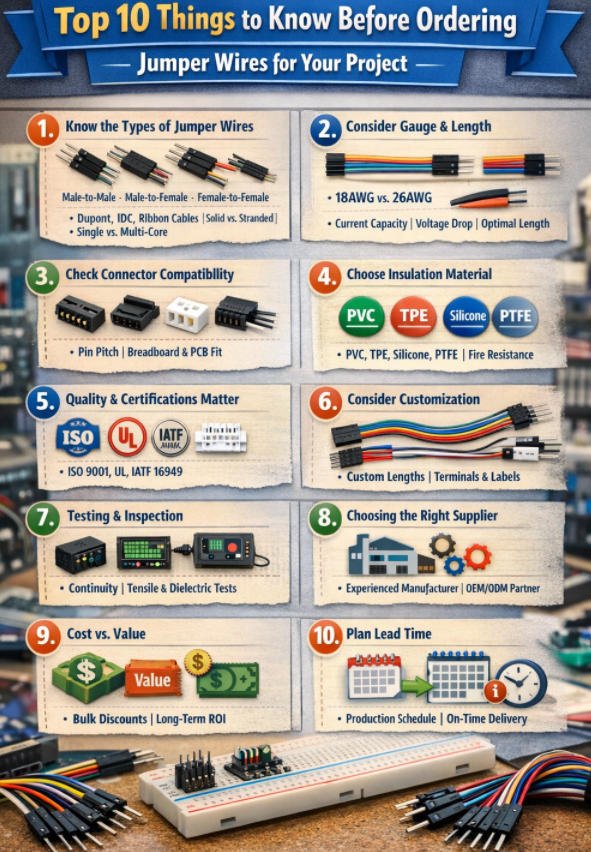
- Understand the Application Requirements for The Jumper Wires
- Know the Types of Jumper Wires
- Consider Jumper Wires Gauge and Length
- Check Jumper Wires Connector Compatibility For Your Project
- Knowing That Insulation and Jacket Material For Jumper Wires
- Quality and Certifications Matter for The Jumper Wires
- When Consider Customization for The Jumper Wires
- Testing and Inspection Protocols for The Jumper Wires
- How To Choose the Right Supplier for The Jumper Wires
- Cost vs. Value for The Jumper Wires
1.Understand the Application Requirements for The Jumper Wires
The first and most important thing to consider is where and how the jumper wires will be used. Are they going into a consumer electronics device, a medical device, an automotive controller, or a piece of industrial equipment? Each application comes with its own unique challenges.
For example, automotive and aerospace projects often involve high vibration and temperature fluctuations. In these cases, your jumper wires must be made from materials that can withstand such harsh conditions and maintain reliable connections over time.
Next, assess the electrical requirements:
- What voltage will the wires carry?
- How much current will flow through them?
- Are there any chances of electrical interference or need for shielding?
Understanding these specs helps you select the correct wire gauge, insulation type, and connector compatibility, which directly affect safety and performance.
Also, consider the environmental factors. Will the wires be exposed to moisture, oils, or chemicals? Will they be used outdoors or in sealed enclosures? Jumper wires can be manufactured with specialized insulation materials like PVC, TPE, or PTFE to protect them in demanding environments.
Finally, if your project involves regulated industries like medical devices, military equipment, or aerospace systems, compliance is non-negotiable. You’ll need jumper wires produced under strict quality control standards such as ISO 9001, IATF 16949, or UL certifications all of which Yihetai is certified for.
2.Know the Types of Jumper Wires
Once you’ve defined your application’s requirements, the next step is understanding the different types of jumper wires available. Using the wrong type might lead to compatibility issues or poor performance, especially during prototyping or when wiring in tight spaces.
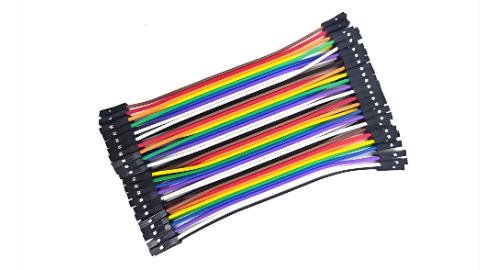
Connector Types: Male-to-Male, Male-to-Female, Female-to-Female
This is the first distinction you’ll come across.
- Male-to-Male jumper wires are commonly used between two female headers, like connecting a breadboard to a microcontroller.
- Male-to-Female wires connect male pins to female ports, useful when interfacing with sensors or boards.
- Female-to-Female wires are ideal for connecting male pins between modules or breakout boards.
- Knowing the connector types on both ends of your system helps ensure quick, hassle-free connections.
Different Wire Formats: Dupont, IDC, and Ribbon Cable Jumpers
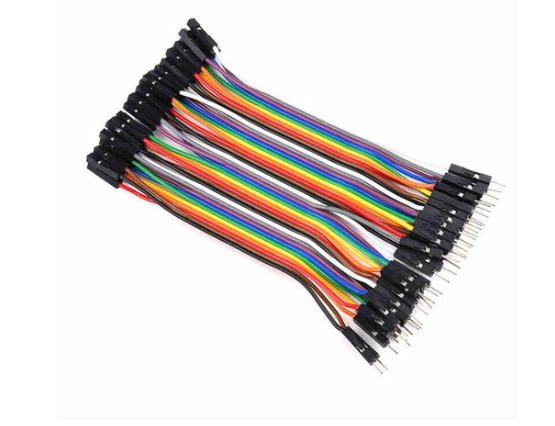
- Dupont wires are popular for prototyping due to their flexibility and pin-to-pin configuration. They come in single or grouped formats with standard 2.54mm spacing.
- IDC jumper cables are flat ribbon-style cables that connect to pin headers using insulation displacement connectors great for compact, parallel signal routing.
- Ribbon cable jumpers are often used when you need to connect multiple signals in tight, organized spaces, such as between a motherboard and a peripheral board.
Solid Core vs. Stranded Core
- Solid core wires are rigid, easier to insert into breadboards, and maintain shape well but they can break under repeated bending.
- Stranded core wires are made of multiple fine copper strands, making them more flexible and ideal for dynamic or vibration-prone environments.
For long-term durability and flexibility, stranded wire is usually preferred in finished products.
Single Core vs. Multi-Core Considerations
Single-core jumper wires carry one electrical signal great for simple setups.
- Multi-core jumpers contain multiple wires in a single jacket, perfect for compact and organized multi-signal applications. This can reduce clutter and improve assembly time, especially in custom wire harnesses.
- Understanding these wire types will help you pick the most compatible and efficient solution for your project and if you’re still unsure, Yihetai can provide expert recommendations and custom-built jumper wire solutions tailored to your exact needs.
3.Consider Jumper Wires Gauge and Length
After deciding on the type of jumper wire, I always move on to two equally important factors: gauge and length. These may seem like technical details, but they have a huge impact on performance, especially in custom or high-demand applications. If you choose the wrong combination, you could face overheating, signal loss, or unnecessary installation hassle. Here’s how I make sure I get it right:
Understanding Wire Gauge (e.g., 18AWG vs. 26AWG)
Wire gauge refers to the thickness of the conductor. A lower number means a thicker wire. For example, 18AWG can carry more current and is more durable, while 26AWG is thinner and more flexible but handles less current. I always check the expected current load and refer to standard ampacity charts before finalizing the gauge.
Gauge Affects Both Current Capacity and Flexibility
When the wire needs to handle higher current (like powering motors or LEDs), I go for thicker gauges like 18–22AWG. For low-power signal connections in tight spaces, thinner wires like 24–28AWG are ideal. Striking the right balance between safety, flexibility, and space constraints is key.
How Length Affects Voltage Drop and Signal Integrity
Long jumper wires can cause voltage drops, especially in low-voltage systems or high-resistance setups. In data communication, long lengths may even lead to signal degradation. That’s why I try to keep jumper wires as short as practical while still giving enough slack for ease of routing and future maintenance.
Choose the Right Length for Clean, Functional Wiring
Too short and the wires are stretched tight too long and they become a tangled mess. I always measure the layout beforehand and choose a length that fits cleanly into the design, avoiding both clutter and stress on connectors. Custom jumper wires from trusted suppliers like Yihetai make it easy to get the exact length and gauge I need.
4.Check Jumper Wires Connector Compatibility For Your Project
After figuring out the wire gauge and length, the next crucial step is making sure the jumper wires will physically and electrically connect correctly to your components. It’s easy to overlook, but choosing the wrong connector type or pin pitch can bring your entire project to a halt. Let’s explore what you need to check before placing an order.
Start with the terminal type
Different devices and boards require different terminals. Here are some of the most common types you’ll encounter:
- IDC (Insulation Displacement Connectors): Typically used with flat ribbon cables, ideal for compact connections to headers or PCBs.
- JST (Japan Solderless Terminal): Known for compact size and secure fit, often used in small electronics, batteries, and consumer gadgets.
- Molex connectors: Rugged and versatile, suitable for automotive, industrial, and high-power applications.
- Terminal blocks: Common in industrial control panels and power distribution systems, allowing secure screw-down connections.
Each of these terminal types requires a matching connector on the wire end, so it’s important to confirm compatibility early in your design process.
Then, consider the pin pitch
Pin pitch refers to the distance between the pins or contacts. The standard size in most hobbyist and development boards is 2.54mm (0.1 inch), but other applications like compact electronics or communication modules may use smaller pitches, such as 1.0mm, 1.25mm, or 2.0mm. If the pitch doesn’t match, your jumper wire won’t fit properly or worse, could cause a short.
Finally, confirm compatibility with your hardware
Whether you’re connecting to a breadboard, a PCB header, or an embedded module, make sure the jumper wire’s end connector physically fits and locks (if needed). Poor-fit connectors can lead to intermittent connections or complete failure during operation.
At Yihetai, we specialize in producing custom jumper wires with precise connector matching whether you need IDC, JST, Molex, or something more specialized. We can help ensure that every wire in your harness fits exactly where it should, giving you confidence in every connection.
5.Knowing That Insulation and Jacket Material For Jumper Wires
After choosing the right connector and wire size, I always take a close look at the insulation and jacket material. This part is often underestimated, but in my experience, the wrong insulation can lead to cracking, overheating, or even safety hazards especially in demanding environments. Here’s what I always consider when selecting the best material for my project.
Compare Common Materials: PVC vs. TPE, Silicone, PTFE
For standard applications, PVC insulation is widely used,it’s affordable, easy to work with, and has decent flexibility. But when I need more durability or heat resistance, I look at options like:
- TPE (Thermoplastic Elastomer): Offers greater flexibility and resilience to bending.
- Silicone: Extremely flexible and great for high-temperature environments.
- PTFE (Teflon): Known for its excellent chemical resistance, thermal stability, and performance in harsh conditions.
Each material has its own strengths, and choosing the right one depends on where and how the jumper wires will be used.
Think About Fire Resistance, Flexibility, and Durability
In tight or mobile installations, flexibility is a must. For example, I use silicone-insulated jumper wires when the wires will be bent frequently or routed through narrow spaces. When working in areas where fire safety is critical, I ensure the insulation meets flame-retardant standards. For high-wear environments, such as industrial or automotive setups, I opt for materials that resist abrasion and chemical exposure.
Applications That Require Special-Grade Insulation
Some projects demand industry specific insulation standards. In medical devices, for instance, jumper wires must often meet medical-grade requirements clean, durable, and biocompatible. In the automotive sector, the insulation must handle temperature swings, vibration, and oils. That’s why I partner with manufacturers like Yihetai, who can provide customized, certified insulation materials tailored to these specific industries.
6.Quality and Certifications Matter for The Jumper Wires
At this stage, I always remind myself that jumper wires are not just accessories they are critical components of the entire system. No matter how well-designed a project is, poor-quality or uncertified jumper wires can become the weakest link. That’s why I never overlook quality standards and certifications when placing an order.
Why Certifications Like ISO, IATF, and UL Are Important
When I see certifications such as ISO 9001:2015, IATF 16949, or UL, I know the jumper wires have been manufactured under strict quality-control systems. These certifications ensure consistent production, proper material selection, and reliable performance especially critical in automotive, industrial, and medical applications.
Certified Jumper Wires Mean Reliability and Safety
Certified jumper wires go through rigorous testing, including continuity, insulation resistance, and voltage withstand tests. From my experience, this translates directly into fewer failures, better electrical stability, and improved safety. When projects involve people, vehicles, or high-value equipment, taking shortcuts on quality simply isn’t an option.
Avoid Cheap, Untested Jumper Wires
I’ve seen low-cost, uncertified jumper wires cause overheating, signal loss, and premature failure. While they may seem attractive at first, they often lead to higher costs in rework, downtime, or product recalls. That’s why I always choose trusted manufacturers like Yihetai, who provide fully tested, certified jumper wires designed for long-term performance.
7.When Consider Customization for The Jumper Wires
Sometimes, no matter how many options you browse online, you just can’t find a jumper wire that ticks all the boxes. That’s when you know it’s time to go custom.
Off-the-shelf jumper wires are fine for basic projects or quick prototyping. But when you’re working on a complex, professional, or space-constrained design, you’ll quickly realize the limits of standard options. Whether it’s the wrong length, incompatible connectors, or wires that don’t hold up under specific conditions, the risks of forcing a mismatch simply aren’t worth it.
With custom jumper wires, you can tailor everything to fit your project’s exact requirements:
- Specific terminal types (IDC, Molex, JST, etc.)
- Precise lengths to avoid clutter or tension
- Color coding for organized wiring
- Heat-shrink tubing for added protection
- Labeling or numbering for easy installation and maintenance
At Yihetai, we specialize in one-stop custom jumper wire solutions. From design consultation to final testing, we handle everything in-house helping you save time, reduce costs, and eliminate guesswork. Whether you need a low-volume prototype or a high-volume production run, we can build it exactly how you need it, with full quality assurance.
8.Testing and Inspection Protocols for The Jumper Wires
A good jumper wire is only as reliable as the testing behind it. I look for manufacturers who conduct multiple quality checks to ensure every wire that leaves their facility meets both mechanical and electrical standards. Some of the most important tests include:
- Tensile testing: Measures the strength of the crimp or solder joint to ensure connectors will not pull loose during use.
- Continuity testing: Verifies that electrical current can flow from one end of the jumper wire to the other without interruption.
- Dielectric (Hi-pot) testing: Checks insulation strength by applying a high voltage to ensure no leakage or breakdown occurs.
- Appearance and size inspection: Confirms that wires meet dimensional and visual standards for neat and correct assembly.
I especially value manufacturers that perform 100% testing on every single jumper wire not just random samples. This level of thoroughness helps prevent failures after installation, such as intermittent connections, shorts, or even system damage.
At Yihetai, all jumper wires go through a full quality control process that includes appearance inspection, electrical testing, and traceability. This gives me complete confidence that what I install will work exactly as expected from day one.
In short, reliable testing = reliable results. It’s one of the smartest checks to make before placing your order.
9.How To Choose the Right Supplier for The Jumper Wires
Even with the right specifications and testing protocols in place, your project’s success still depends on who you choose to manufacture your jumper wires. I’ve learned that not all suppliers are created equal especially when it comes to quality, responsiveness, and customization. Picking the right partner can mean the difference between a smooth build and weeks of costly delays. Here’s what I look for when selecting a jumper wire supplier.
How to Choose the Right Supplier for the Jumper Wires?
Experience Really Matters
An experienced manufacturer understands the nuances of wire harness production from material selection to crimping, testing, and compliance. I always look for suppliers with a proven track record in the industry. A company like Yihetai, with over 23 years in custom wiring harness manufacturing, brings expertise across a wide range of applications from automotive and medical to industrial electronics and renewable energy.
Evaluate Their Capabilities and Product Range
Beyond experience, I check whether the supplier can handle various production needs:
- Can they provide both small batch and large-scale production?
- Do they support a variety of connector types, wire gauges, and insulation materials?
- Are their production and testing processes done in-house?
Yihetai, for example, not only offers a broad range of wire harness products including jumper wires, IDC ribbon cables, and molded assemblies but also manages design, development, and full testing under one roof. That’s a huge advantage for both speed and quality control.
Why Work with a Trusted OEM/ODM Partner Like Yihetai
When I need more than just parts like design support, fast prototyping, or fully customized solutions,I go with an OEM/ODM partner I can trust. Yihetai offers full customization, technical consultation, and certified manufacturing, which helps me streamline the entire process from concept to delivery. Their ability to understand my needs and translate them into reliable, ready-to-use products is what makes the partnership valuable.
Cost vs. Value for The Jumper Wires
When it comes to jumper wires, many people focus only on price. I get it especially for high-volume projects, keeping costs down is important. But in my experience, the smarter question is not just what is cheapest, but what gives the best long-term value.
Balancing cost and quality is essential. Low-cost, untested wires might look appealing upfront, but they often lead to poor connections, performance issues, or even product failures. That can mean delays, repairs, and higher costs later. On the other hand, investing in high-quality, certified jumper wires provides consistent performance, better durability, and a much higher return over the life of your product.
If you’re producing at scale, working with a manufacturer like Yihetai brings even more benefits. We help you optimize your wire specs and lower your unit cost through bulk production, without compromising on quality.
Conclusion:
Before ordering any jumper wires, I always remind myself how important it is to assess the project needs carefully. From the type of connection to the environment the wires will operate in, every detail matters. Taking the time to plan ahead not only improves performance but also saves time, money, and frustration in the long run.
If you are unsure about which jumper wires are right for your application or need a customized solution, I highly recommend reaching out to experts who truly understand the process. At Yihetai, we have over 23 years of experience providing high-quality, fully tested custom wire harnesses for a wide range of industries.
Feel free to contact us for a consultation. Our team is always ready to help you choose the best jumper wire solution for your project with fast lead times, reliable quality, and competitive pricing.
Read more: Top 10 Things to Know Before Ordering Jumper Wires for Your ProjectRelated Blog
- How to Select the Correct Wire Gauge for Power and Signal Applications?
- How to Design a Custom Wire Harness for Harsh Environments?
- How to Choose the Right Wire Harness for Industrial IoT Applications?
- JST vs. Other Connector Types: What Makes JST Cable Assemblies So Popular?
- What Is Overmolding Cable Assemblies and How to Know When to Use It Effectively?