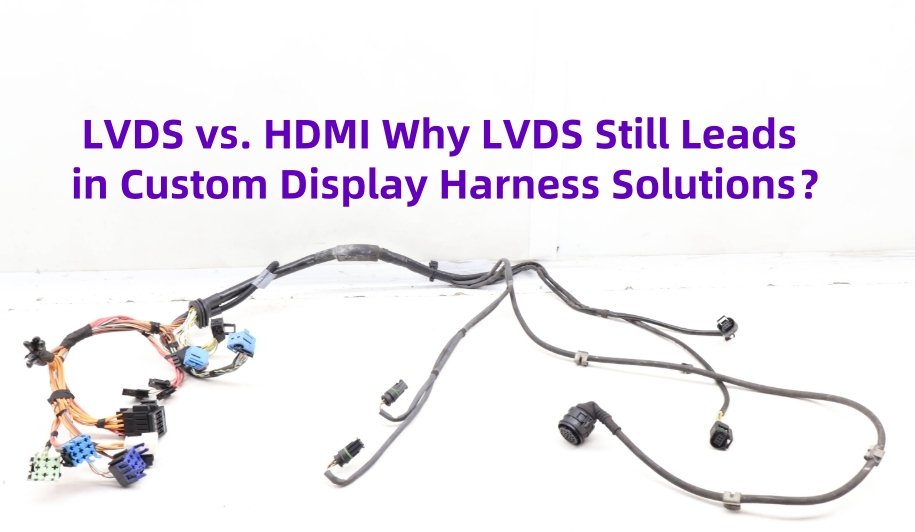
In today’s world of modern electronics, display interface cables are everywhere, connecting our devices, powering our experiences, and delivering the visuals we rely on every day. But here is the challenge: as displays become sharper, faster, and more complex, the demand for reliable and high performance display connections is skyrocketing. The stakes are even higher in industrial and embedded environments where a single cable failure can halt an entire system.
This is where the battle between HDMI and LVDS comes into play. HDMI dominates consumer electronics from televisions to gaming consoles thanks to its convenience and versatility. However, in the world of custom display harness solutions, especially for industrial and embedded applications, LVDS quietly holds the crown. The reason is simple: when it comes to durability, signal integrity, and tailored performance, LVDS still leads the way.
In this post I will explain why LVDS remains the preferred choice when reliability matters most.
What Is LVDS Cable?
LVDS is a high-speed data transmission technology that uses low-voltage differential signaling. It is an electrical standard designed to transmit digital data over copper cables with very low power consumption and minimal electromagnetic interference (EMI).
LVDS transmits data using two wires that carry complementary signals—meaning the voltage on one wire is the opposite of the voltage on the other wire. Instead of measuring the voltage of a single wire relative to ground (single-ended signaling), LVDS measures the voltage difference between the two wires. This differential signaling provides strong noise immunity because any external interference affects both wires equally, canceling out as common-mode noise. The receiver detects the voltage difference (around 350 millivolts) to determine the digital signal. This method allows high-speed data transmission with low voltage swings, reducing power consumption and electromagnetic noise.
LVDS cables are widely used in applications requiring reliable, high-speed data transfer, especially in environments sensitive to noise. Typical applications include:
- Industrial monitors and large LCD displays
- Automotive displays and infotainment systems
- Medical equipment displays
- Cameras and machine vision systems
- Notebook and tablet internal display connections
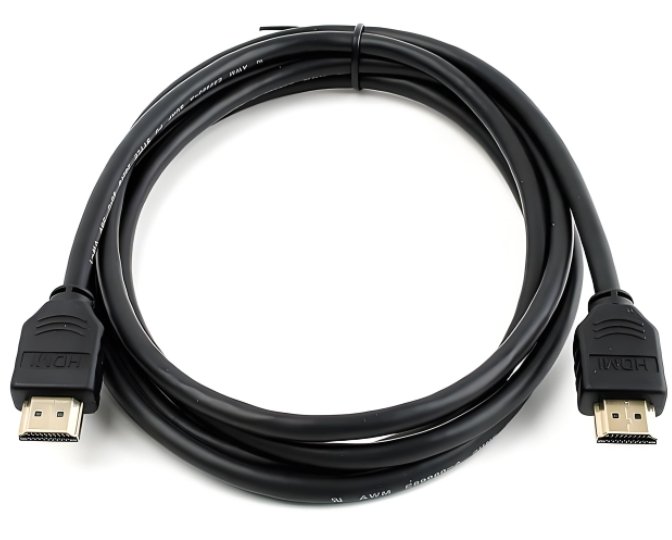
What Is HDMI Cable?
HDMI stands for High-Definition Multimedia Interface. It is a digital interface standard designed primarily for transmitting both high-definition video and audio signals through a single cable. HDMI was developed to replace older analog video and audio connections with a single, compact, and versatile digital interface.
HDMI cables carry uncompressed digital video as well as multi-channel digital audio signals. The interface supports a wide range of video resolutions, including standard, enhanced, and high-definition formats, and can also carry various audio formats such as stereo, surround sound, and high-resolution audio. HDMI is widely implemented in consumer electronics devices such as HDTVs, Blu-ray players, gaming consoles, laptops, and home theater systems. The convenience of combining audio and video in one cable reduces cable clutter and simplifies setup.
Typical Use Cases:
- TVs and Home Entertainment Systems: HDMI is the primary connection standard for modern televisions and home theater receivers, allowing connections from Blu-ray players, streaming devices, and soundbars.
- Gaming Consoles: Devices such as PlayStation, Xbox, and Nintendo Switch use HDMI cables to connect to displays, delivering high-quality video and immersive sound.
- Laptops and Computers: HDMI ports on laptops and PCs enable connection to monitors and projectors for presentations, extended or mirrored displays, and high-definition media playback.
- Other Consumer Electronics: Digital cameras, camcorders, and some tablets also use HDMI for transferring audio/video data.
Technical Comparison: LVDS Cable vs. HDMI Cable
When selecting the right display cable for a project, it is important to understand the technical differences between LVDS and HDMI. Although both can transmit high quality video signals, their design, purpose, and performance characteristics are quite different. HDMI dominates in the consumer electronics space with its ability to carry both audio and video in a single cable. LVDS, on the other hand, is engineered for industrial and embedded applications where reliability, EMI resistance, and custom wiring flexibility are critical. The table below outlines the key technical differences between the two.
| Feature | LVDS Cable | HDMI Cable |
| Full Name | Low-Voltage Differential Signaling | High-Definition Multimedia Interface |
| Signal Type | Differential signaling (balanced pairs) | Digital single-ended signaling (TMDS encoding) |
| Data Transmission | High-speed serial with low voltage difference | High-speed digital video and audio over single cable |
| Typical Use Cases | Industrial monitors, automotive displays, medical equipment, custom display wiring | TVs, gaming consoles, laptops, home entertainment systems |
| Cable Length | Typically effective over longer distances; can be extended with good noise immunity | Limited to around 15 meters without active extenders |
| Power Consumption | Low power due to low voltage swings | Higher power consumption compared to LVDS |
| Noise Immunity | High; resistant to electromagnetic interference due to differential signaling | Moderate; more susceptible to EMI |
| Bandwidth | Supports high bandwidth for display data; depends on number of lanes | High bandwidth supporting up to 48 Gbit/s in latest versions |
| Connector Type | Custom connectors for industrial/custom harnesses | Standardized HDMI connectors (Type A, C, D) |
| Supports Audio Transmission | No, primarily video data transmission | Yes, combines high-definition video and surround sound |
| Flexibility in Custom Harness Design | High; easy to tailor cable configurations | Limited; less adaptable for custom wiring |
| Cost | Generally lower cost for custom industrial setups | Potentially higher cost in custom applications |
| Application Suitability | Industrial, automotive, embedded, where noise and cable length matter | Consumer electronics with integrated AV needs |
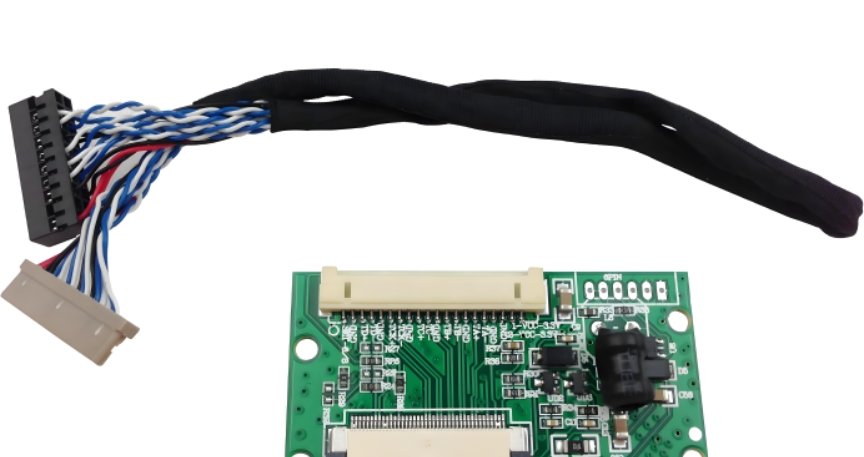
Why LVDS Leads in Custom Display Harness Solutions
After comparing LVDS and HDMI from a technical perspective, it becomes clear why LVDS remains the top choice for custom display harness solutions in demanding environments. While HDMI excels in standardized consumer applications, LVDS offers the unique blend of performance, durability, and flexibility that custom industrial, automotive, and embedded projects require. Let’s explore the specific reasons LVDS continues to lead in this space.
High-Speed Transmission: LVDS technology supports very high data rates, with typical transmission speeds reaching hundreds to thousands of megabits per second. This capability ensures smooth, high-quality video signal transmission even at high resolutions.
Low Power Consumption: LVDS operates with very low voltage swings (usually around 350 mV) and a constant current of about 3.5 mA, greatly reducing power consumption compared to many other signaling methods. This means less heat generation and improved efficiency, ideal for compact or enclosed display assemblies.
Strong Noise Immunity: By using differential signaling, LVDS inherently rejects common-mode noise and electromagnetic interference. The differential pair transmits one signal as the positive and the other as the negative counterpart, allowing noise coupled equally on both lines to cancel out at the receiver. This results in robust, error-free data in electrically noisy environments.
Minimal Electromagnetic Interference (EMI): The cancellation of electromagnetic fields produced by the complementary signals means LVDS cables radiate very little EMI. This minimizes interference with other nearby electronics and improves overall system integrity.
Precise Timing and Synchronization: LVDS carries not only pixel data but also clock, synchronization, and control signals, enabling precise timing essential for accurate display rendering and avoiding artifacts.
Flexibility in Custom Harness Design: LVDS cables utilize twisted pairs with controlled impedance (usually 100 Ω), which are easy to customize in terms of length, shielding, and connector types. This flexibility allows engineers to create harnesses tailored to specific industrial, automotive, or medical applications with varied environmental and mechanical requirements.
Wide Operating Conditions: LVDS harnesses perform reliably over wide temperature ranges and in harsh conditions, making them suitable for rugged environments where consumer-grade cables might fail.
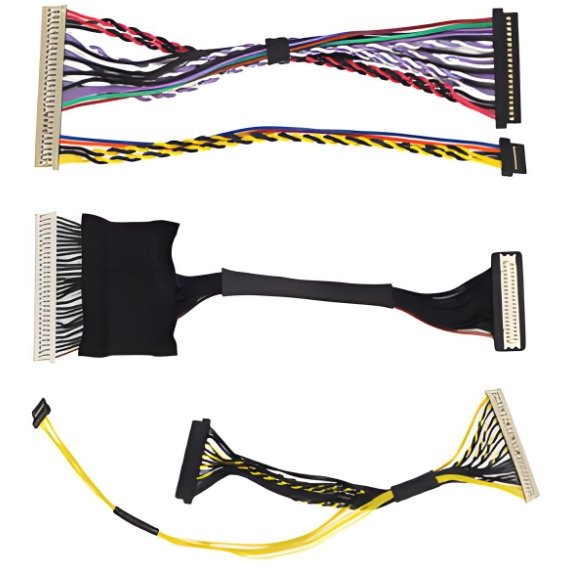
What Are the Advantages of Using LVDS in Custom Display Harness Solutions?
When selecting the ideal cable technology for custom display harness solutions, several factors come into play, including signal integrity, power efficiency, noise immunity, and design flexibility. LVDS stands out among available options because it addresses these critical factors exceptionally well, making it the preferred choice for reliable, high-performance display wiring in diverse industries.
Here are 8 keys advantages of using LVDS in custom display harness solutions:
1.Low Power Consumption
LVDS operates with very low voltage swings (typically around 350mV), which significantly reduces power usage compared to other signaling methods. This efficiency contributes to lower heat generation and is especially important in compact or energy-sensitive devices.
2.High Noise Immunity
The differential signaling technique used by LVDS transmits signals over pairs of wires carrying opposite voltages. This cancels out noise that affects both wires equally, providing robust resistance to electromagnetic interference (EMI) and radio frequency interference (RFI). This is crucial in electrically noisy environments like automotive or industrial settings.
3.Reduced Electromagnetic Interference (EMI)
Because the currents on the differential pairs flow in opposite directions, their emitted electromagnetic fields cancel each other out, greatly minimizing EMI emissions. This reduces interference with other nearby electronic systems and helps meet regulatory standards.
4.High-Speed Data Transmission
LVDS supports very high data rates, often exceeding hundreds of megabits per second, which is critical for transmitting high-resolution video data and complex display signals efficiently and without errors.
5.Robust Signal Integrity and Low Bit Error Rate (BER)
The combination of differential signaling and precise termination matching enhances signal integrity, reducing the likelihood of errors during transmission. This reliability is especially important for critical applications such as medical imaging and automotive displays.
6.Flexibility in Custom Harness Design
LVDS cables can be customized in terms of wire gauges, shielding, cable length, and connector types, allowing engineers to tailor harnesses to unique space, environmental, and performance requirements. This flexibility enables efficient wiring layouts and easy integration into various device form factors.
7.Integration of Multiple Signal Types
Beyond data transmission, LVDS harnesses often include lines for clock signals, synchronization signals (HSYNC, VSYNC), control signals, power supply, and device identification, consolidating multiple functions into a single custom cable assembly.
8.Compliance With Industry Standards
High-quality LVDS harness manufacturers adhere to strict specifications (such as 100Ω differential impedance and current levels around 3.5mA), ensuring compatibility and consistent performance across applications.
Key Design Considerations for Custom LVDS Harnesses (Quick Checklist)
When specifying an LVDS cable assembly, performance is not only determined by the interface itself, but also by how well the harness is engineered for impedance control, noise suppression, and mechanical reliability. A well-designed LVDS harness helps you avoid display flicker, intermittent signal loss, and long-term failures in real-world environments.
Here is a quick checklist engineers should confirm before moving to prototype or mass production:
- Differential impedance control (typically 100Ω): Ensure the cable structure hookup (pair geometry, dielectric, shielding) supports stable impedance across the full run.
- Pair length matching and low skew: Keep differential pair lengths matched and routing consistent to reduce timing errors and improve BER performance.
- Proper termination and minimal stubs: Use correct termination at the receiving side and avoid unnecessary branching that can introduce reflections.
- Shielding and grounding strategy: Choose foil/braid shielding as needed, and define shield termination (drain wire / 360° termination) based on EMI requirements.
- Connector and locking requirements: Select connectors that fit your mechanical constraints and vibration needs (e.g., latch/lock, plating, mating cycles).
- Mechanical durability: Confirm bend radius, strain relief/overmolding needs, abrasion protection, and temperature rating for the application environment.
- Validation plan: Include continuity tests, impedance/TDR checks, and functional testing under vibration/temperature when required for industrial or automotive use.
With these parameters defined early, LVDS harness development becomes faster, more predictable, and easier to scale from prototype to mass production.
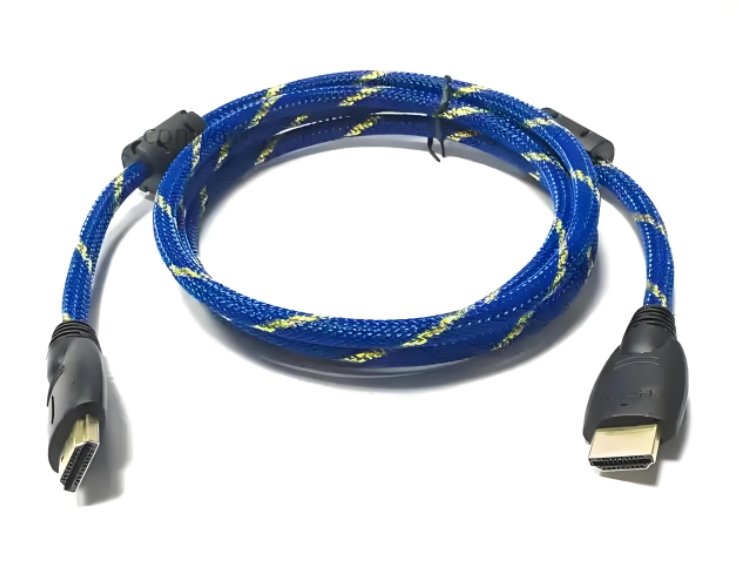
What Are the Limitations of HDMI in Custom Harness Applications?
In custom harness applications, HDMI cables face several limitations that impact their suitability, especially when compared to specialized solutions like LVDS. Understanding these constraints is essential when designing custom wiring harnesses for industrial, automotive, or medical displays where reliability, flexibility, and signal integrity are critical.
Here are the main 6 limitations of HDMI in custom harness applications:
1.Limited Cable Length
HDMI cables typically work reliably up to about 15 meters (50 feet). Beyond this length, signal degradation occurs due to attenuation and loss, resulting in potential flickering, signal dropouts, or complete failure. Extending HDMI signals over longer distances requires expensive active extenders, repeaters, or fiber-optic cables, adding complexity and cost.
2.Lower Noise Immunity
HDMI is more susceptible to electromagnetic interference (EMI) and noise compared to differential signaling methods like LVDS. This makes HDMI prone to signal degradation in electrically noisy environments common in industrial and automotive settings.
3.Limited Ruggedness and Customization
HDMI connectors and cables are primarily designed for consumer-grade, plug-and-play applications. They lack the robust physical design and flexible configuration options important for custom or harsh environment harnesses, such as specialized shielding, connector locking mechanisms, and cable constructions optimized for bending or environmental exposure.
4.Power and Heat Considerations
HDMI signaling consumes more power and can generate more heat compared to LVDS, potentially impacting system design in compact or sealed assemblies where thermal management is critical.
5.Compatibility and Version Issues
HDMI cables and devices must match in HDMI version (e.g., 2.0, 2.1) to support advanced features like 4K@120Hz or 8K video. In mixed-version environments or with older cables, compatibility problems may arise, complicating integration in multi-component systems.
6.Integrated Audio and Video
While an advantage in consumer electronics, HDMI’s integration of audio and video over a single cable can be less flexible in specialized systems where audio may be handled separately or not needed, leading to unnecessary complexity in custom harness designs.
What Are the Real-World Applications of LVDS Cables?
LVDS cables have become a cornerstone technology for high-speed, reliable data transmission across a variety of demanding real-world applications. Their capability to maintain signal integrity and resist interference makes them invaluable in environments where performance and durability are critical.
Here are 6 keys real-world applications of LVDS cables:
1.Industrial Monitors and Automation Systems
LVDS cables are widely used in industrial control and monitoring systems. Their strong noise immunity and stable, high-speed data transmission make them ideal for connecting industrial display panels, machine vision systems, and factory automation equipment, where electrical noise and harsh conditions are common.
2.Automotive Displays and Systems
Modern vehicles rely on multiple display systems such as infotainment screens, instrument clusters, rear-seat entertainment, and camera systems like advanced driver-assistance systems (ADAS). LVDS cables provide secure, high-speed connections within the automotive environment, supporting robust performance even under vibrations, temperature fluctuations, and electrical noise.
3.Medical Equipment
Medical imaging devices, diagnostic machines, and monitoring systems require precise, high-resolution video and data transmission. LVDS cables help ensure accurate and reliable signal delivery, which is essential for patient safety and diagnostic accuracy in medical environments.
4.Consumer Electronics and Portable Devices
LVDS is commonly used inside laptops, tablets, and smartphones to connect display panels with motherboards. Its low power consumption and high data integrity help extend battery life and maintain display quality for high-resolution screens.
5.Digital Cameras and Video Equipment
LVDS cables transmit high-speed video signals in cameras, camcorders, and other digital video devices, providing clear and uninterrupted imaging data.
6.Aerospace and Defense
In avionics and other aerospace applications, LVDS cables serve critical roles in transmitting data with minimal latency and high reliability under extreme environmental conditions.
LVDS Custom Harness Design Checklist (Practical Tips)
Before choosing LVDS for an industrial or embedded display system, it helps to follow a few proven design rules to ensure stable signal quality and long-term reliability. A well-designed LVDS harness is not only about the connector it’s about impedance control, routing discipline, shielding strategy, and validation.
Key checklist items include: maintaining 100Ω differential impedance across the cable and connector path, keeping pair length matching as tight as possible to minimize skew, and routing LVDS pairs away from high-current power lines, motors, and switching power supplies to reduce EMI coupling. For harsh or noisy environments, consider overall shielding + proper grounding and choose cable jackets and strain relief suitable for bending, vibration, and temperature cycling. Finally, validate performance with practical tests such as continuity/short tests, impedance checks (TDR if available), and real system verification to confirm stable images with no flicker, noise, or intermittent dropouts.
When to Use HDMI Calbe Instead
HDMI cables are an excellent choice in many scenarios, especially where ease of use and broad device compatibility are required. While LVDS excels in custom and industrial display harness solutions, HDMI is often the preferred option for consumer and audio-visual applications. Understanding when to use HDMI instead can help you select the most suitable interface for your needs.
You should use an HDMI cable instead of LVDS in the following 5 situations:
1.Home Entertainment and Consumer Electronics
HDMI is the industry standard for connecting HDTVs, projectors, Blu-ray players, gaming consoles, and streaming devices. Its integrated audio and video capabilities, ease of use, and standardized connectors make it ideal for home theaters, living rooms, conference rooms, and similar environments.
2.High-Resolution Audio/Video Transmission
When you need to transmit uncompressed high-definition video and multi-channel audio from a single source to a display or sound system, HDMI cables are designed specifically for this purpose. Modern HDMI versions support 4K, 8K, HDR, and advanced audio formats, making them suitable for demanding media applications.
3.Plug-and-Play Simplicity
HDMI cables are generally plug-and-play, requiring no configuration for most consumer devices. This simplifies installation and setup for users who are not technically inclined.
4.Versatility and Widely Supported Devices
HDMI ports are prevalent across virtually all modern TVs, monitors, laptops, gaming consoles, soundbars, and other entertainment hardware. If both your source and your display devices have HDMI ports, using an HDMI cable is usually the most straightforward and compatible solution.
5.Audio Return Channel (ARC) and Networking
HDMI supports features like Audio Return Channel (ARC) and HDMI Ethernet Channel, allowing for additional convenience, such as sending audio from a TV back to a receiver or streaming device without the need for extra cables.
How Yihetai Supports Custom LVDS Cable Solutions
Choosing the right partner for custom LVDS cable solutions is just as important as selecting the right technology. In demanding industrial, automotive, and medical applications, you need a manufacturer that not only understands LVDS technology but also has the proven capability to design, produce, and deliver harnesses that meet your exact requirements. Yihetai has built its reputation on doing exactly that.
How Yihetai Supports Custom LVDS Cable Solutions
1.Over 23 Years of Industry Experience
With more than two decades of expertise in custom wire harness manufacturing, Yihetai understands the complexities of LVDS design and the challenges of integrating these cables into specialized systems.
2.Full In-House Production
From material development to cable assembly, every stage is handled in-house. This allows for tight quality control, fast response to design changes, and consistent product reliability.
3.Certified Quality Standards
Yihetai’s facilities are certified to ISO 9001, UL, and IATF16949 standards, ensuring that every LVDS harness meets rigorous international quality and safety requirements.
4.Specialized LVDS Harness Capabilities
We have the expertise to produce a wide range of LVDS harness types, including JAE FI-X, IPEX 20453, HRS DF14, and Molex 51146, all tailored to the specific needs of your application.
5.Flexible Production Volumes
Whether you require a small pilot run or high-volume manufacturing, Yihetai has the capacity and flexibility to meet your schedule without compromising quality.
6.Complete Testing and Traceability
Every harness undergoes 100% electrical testing, and each product is fully traceable to guarantee consistent performance and reliability over its lifetime.
In short, Yihetai offers not just LVDS cables but a complete, certified, and proven solution for your custom display harness needs.
Conclusion
After exploring both HDMI and LVDS, it is clear to me that while HDMI dominates the consumer market, LVDS continues to be the leading choice in industrial and embedded display systems. In these demanding environments, reliability is essential and every connection must perform flawlessly for many years.
Custom display wiring requires more than just a fast connection. It needs flexibility to adapt to unique designs, strong resistance to EMI for signal integrity, and the ability to maintain performance over the long term. LVDS delivers on all of these requirements, which is why it remains my preferred recommendation for professional and industrial applications.
When you are looking for a partner to design and manufacture high quality LVDS harnesses tailored to your exact needs, I trust Yihetai. With our expertise, precision and commitment to quality, we make sure your display connections work exactly as you need them to every time.
Read more: LVDS vs. HDMI Why LVDS Still Leads in Custom Display Harness Solutions?Related Blog
- LVDS vs. IPEX: Which Display Cable Is Right for Your Product?
- How to Select the Best LCD Display Cable for Your Product Design
- Custom LCD Display Cable Assemblies: Why OEMs Choose Yihetai
- Coaxial Cable vs. Twisted Pair Cables Which One Fits Your Needs?
- 10 Tips for Choosing the Right Terminal in Your Cable Assembly