
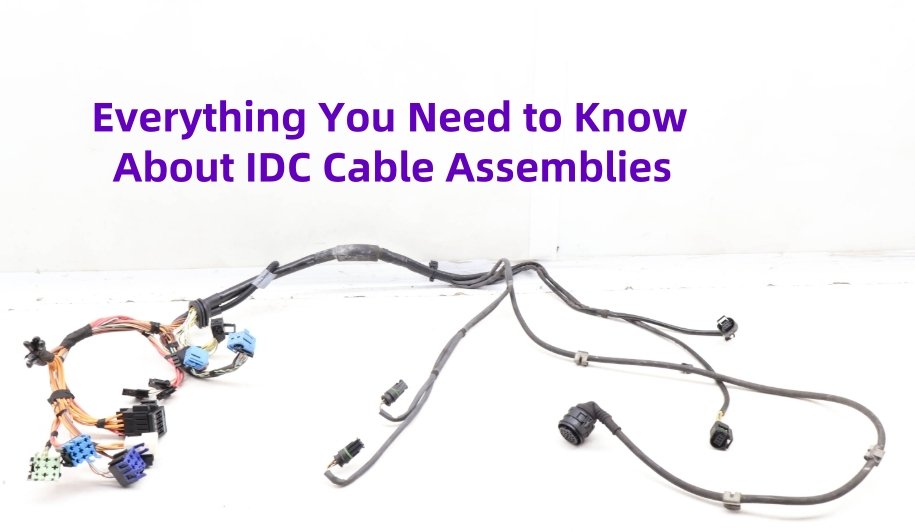
Have you ever struggled to manage messy, unreliable wiring in your electronic or automation systems? I’ve seen firsthand how poor cable connectivity can lead to delays, failures, and costly maintenance. That’s where cable assemblies come in they’re organized bundles of wires and connectors designed to simplify complex wiring and improve performance. But not all cable assemblies are created equal.
One of the most efficient and reliable solutions I work with is IDC (Insulation Displacement Connector) technology. Instead of stripping and soldering, IDC connectors pierce through wire insulation to create a strong, consistent connection—fast and without errors.
In today’s high-speed, high-volume industries, IDC cable assemblies are a game-changer. Whether it’s for data systems, automation equipment, or consumer electronics, they offer speed, precision, and dependability you can count on. In this post, I’ll walk you through everything you need to know about them and why they matter more than ever.
What Is an IDC Cable Assembly?
An IDC Cable Assembly refers to a cable system that uses IDC (Insulation Displacement Connector) technology to make fast, reliable electrical connections without the need to strip wire insulation. These assemblies are widely used in industries where high-speed, high-density, and low-cost wiring solutions are required.
IDC stands for Insulation Displacement Connector. It is a type of electrical connector specifically designed to connect insulated conductors without the need to remove the insulation beforehand. Instead of relying on crimping or soldering, IDC technology makes the electrical contact by displacing the insulation as it pierces through it.
So how does it work? Unlike traditional connectors that require the insulation to be manually removed, IDC connectors feature sharp metal blades or teeth. When the connector is pressed onto the wire (usually by a tool or machine), these blades pierce through the insulation and make direct contact with the conductor inside. This method creates a secure, low-resistance electrical connection in one simple step.
Typical cable types used in IDC assemblies include:
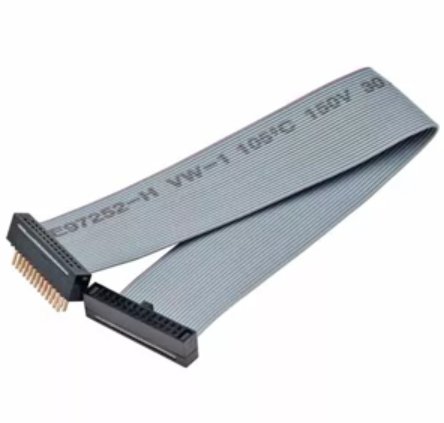
- Flat ribbon cables – ideal for compact and organized connections.
- Flat flexible cables (FFC) – commonly used in tight spaces or dynamic applications.
- Multi-core flat cables – used in industrial and automotive control systems.
This assembly type is widely used in computers, printers, control panels, communication systems, and industrial equipment, where high-density, space-saving, and reliable connections are critical.
What Are the Components of an IDC Cable Assembly?
Now that you understand what an IDC cable assembly is and how it works, let’s take a closer look at what actually goes into building one. Each IDC assembly is made up of several key components, all of which play a critical role in ensuring reliable performance and easy integration into electronic systems. Whether you’re dealing with a simple 2-wire connection or a complex multi-wire harness, the following elements are essential:
1.IDC Connectors (2.54mm, 2.0mm, etc.)
IDC connectors are the heart of the assembly. They come in various pitches, with 2.54mm (0.1 inch) and 2.0mm being the most common. These connectors use sharp metal contacts to pierce the wire insulation and establish a connection with the conductor. They’re available in multiple pin counts, depending on the number of wires in the ribbon cable.
2.Ribbon Cables or Flat Cables
These cables consist of multiple parallel wires that make them perfect for IDC connectors. Ribbon cables are most often used, especially in applications like computer systems and industrial control panels. Flat cables are chosen for their neat, organized layout, which helps in managing space in tight enclosures.
3.Termination Tools
To assemble IDC cables, you’ll need the right tools. This could range from manual crimping tools for small production runs to automated presses for high-volume manufacturing. These tools press the connector onto the cable, ensuring all contacts cut through the insulation at the correct depth and angle.
4.Optional Features (Polarizing Keys, Strain Relief, Housing)
Many IDC connectors include optional features to improve performance and usability:
- Polarizing keys ensure the connector is inserted in the correct orientation.
- Strain relief clips or covers protect the connection from mechanical stress or pulling.
- Plastic housings or covers may be added for insulation, durability, or easy mounting.
How Does an IDC Connector Work?
IDC (Insulation Displacement Connector) technology has become a popular and efficient method for connecting ribbon cables to connectors, especially in industries like telecommunications, automotive electronics, and industrial equipment. Rather than requiring time-consuming processes like wire stripping or soldering, IDC connectors simplify and accelerate assembly by using a unique mechanical design that makes direct contact with the conductors. This design not only reduces labor costs but also ensures consistent, high-quality connections even in high-volume production environments.
Let’s explore how an IDC connector works in detail:
1.The “Displacement” Mechanism
At the heart of IDC technology is its ability to cut through a cable’s insulation without stripping it beforehand.
- Each terminal inside the IDC connector contains sharp metal blades, known as insulation displacement contacts.
- When the cable is pressed into the connector, these blades slice through the outer insulation layer of the wire and make direct contact with the conductor inside.
- The insulation is not removed entirely but is displaced (pushed aside), allowing a gas-tight, secure, and low-resistance electrical connection without damaging the wire strands.
This process is highly precise and eliminates the need for manual stripping, which is often a source of inconsistency in traditional crimp or solder methods.
2.Step-by-Step Connection Process
Here is how the IDC connection process typically works:
Step 1 – Cable Preparation
Choose a suitable flat ribbon cable, often UL2651 or similar, matching the pitch (e.g., 2.54mm or 2.0mm) and number of conductors to the connector.
Step 2 – Alignment
Position the ribbon cable over the IDC connector with precise alignment using a fixture or guide if necessary.
Step3 – Insertion/Pressing
Using either a manual press tool or automated IDC press machine, the cable is pushed into the connector’s terminals.
The terminals pierce the insulation and make electrical contact with the conductors.
Step 4 – Securing the Connector
Some connectors have an upper cover or strain relief clip that is closed over the cable to hold it firmly in place and add mechanical protection.
Step 5 – Optional Features
Polarizing keys, strain reliefs, and housing locks may be added to prevent misalignment and ensure long-term stability.
At Yihetai, our production team utilizes both manual and automated processes to ensure accurate termination and uniform quality—particularly important in complex harnesses or high-volume orders.
3.Advantages of IDC Connections
Speed:
IDC connectors dramatically reduce assembly time. No need for stripping or tinning wires means faster throughput, especially for multi-conductor cables.
Consistency:
Using automated tools ensures consistent crimp depth and pressure, minimizing variability and improving long-term reliability.
Error Reduction:
Built-in alignment guides, polarizing features, and secure locking mechanisms reduce the chances of wiring errors or reverse insertion.
Cost Efficiency:
Fewer manual steps and reduced labor translate to lower production costs, especially when scaled.
Long-Term Reliability:
IDC connections are gas-tight and resistant to vibration and corrosion, making them ideal for automotive and industrial applications.
What Are the Key Features of IDC Cable Assemblies?
IDC (Insulation Displacement Connector) cable assemblies are a trusted solution in industries that demand fast, compact, and cost-effective connectivity especially in electronics, automation, communication systems, and control panels. Unlike traditional wiring methods, IDC cable assemblies are engineered to provide consistent and solderless terminations across multiple conductors at once. This makes them ideal for mass production, reducing labor time while increasing reliability and precision.
Let’s break down the key features that make IDC cable assemblies a smart choice:
1.Fast, Solderless Connections
One of the standout features of IDC assemblies is the ability to create secure electrical connections without the need for soldering or stripping the wire insulation.
- The IDC connector terminals pierce the cable’s insulation and make contact with the conductor in a single pressing motion.
- This enables rapid assembly, especially when using automated IDC presses.
- It also eliminates risks associated with soldering such as cold joints or inconsistent contact, ensuring long-term electrical stability.
At Yihetai, our production lines are equipped with high-efficiency pressing tools that ensure every IDC termination is uniform, secure, and optimized for performance.
2.Low-Cost and Reliable for Mass Production
IDC technology was designed with scalability in mind. It reduces material and labor costs, making it ideal for large-scale manufacturing.
- No stripping, tinning, or soldering means fewer steps and less specialized labor required.
- Lower tooling and maintenance costs compared to crimping or soldering stations.
- Fewer defects and rework due to the controlled nature of the termination process.
- Proven reliability across many industries, including automotive, household appliances, and industrial automation.
Our customers benefit from Yihetai’s efficient assembly lines and strict quality control, enabling us to offer highly competitive pricing without compromising on durability.
3.Designed for Flat Ribbon Cables
IDC connectors are specifically optimized for use with flat ribbon cables, which consist of multiple parallel conductors aligned in a single flat profile.
- This design makes cable routing simple and compact, reducing clutter in control panels or enclosed devices.
- Ribbon cables can easily fit into tight spaces and allow for organized, easy-to-trace wiring.
- Standard cable types like UL2651 or rainbow flat cables are often used.
Yihetai offers customized flat ribbon cable assemblies with various pitch sizes (e.g., 2.54mm, 2.0mm) to suit a wide range of connector systems.
4.Can Handle Multiple Connections Simultaneously
Unlike traditional single-wire terminations, IDC cable assemblies can connect multiple wires at once, dramatically improving assembly efficiency.
- A single IDC press can connect 10, 20, or even 50 wires simultaneously depending on the connector size.
- Ideal for connecting PCBs, module interfaces, or linking multiple components in a single action.
- Ensures uniform connection depth and contact across all wires, improving electrical consistency
This feature makes IDC assemblies an ideal choice for high-density electronic applications and automated production environments.
What Are the Types of IDC Connectors and Assemblies?
Not all IDC connectors are created equal. Depending on the application, cable type, and space constraints, different IDC connector styles are used to ensure optimal performance and compatibility. Choosing the right type of IDC connector is essential for ensuring your assembly fits your system requirements while maintaining reliability and ease of use. Below are the most common types you’ll encounter in IDC cable assemblies.
1.IDC Socket Connectors
IDC socket connectors are designed to mate with corresponding pin connectors, providing a secure interface between the cable and the device or board. These sockets are versatile and widely used for connecting flat ribbon cables to circuits or other connectors, allowing easy plug-and-play capability.
2.IDC Male/Female Connectors
IDC connectors are available in male and female versions. Male connectors typically have pins that fit into female sockets or connectors, enabling a secure and polarized connection. This male/female pairing is essential for creating cable assemblies that connect equipment components or boards reliably.
3.Dual-Row vs Single-Row Connectors
IDC connectors can feature either single-row or dual-row pin configurations. Single-row connectors have one line of pins, suitable for applications with fewer connections or limited space. Dual-row connectors have two parallel rows of pins, doubling the number of connections in about the same footprint, which is ideal for higher density wiring needs such as in data communication or computer hardware.
4.Common Examples by Pitch
IDC connectors are categorized by their pin spacing, known as pitch, which is the center-to-center distance between adjacent pins. Common pitches include:
- 2.54mm Pitch: The most widely used standard pitch, balancing density and ease of handling, often used in general electronics and prototyping.
- 2.0mm Pitch: A smaller pitch for more compact designs requiring higher-density connections than 2.54mm.
- 1.27mm Pitch: Even smaller pitch for very high-density connector needs in compact electronic devices.
Most IDC cable assemblies feature these pitch options and are typically available in both single and double-row configurations, allowing designers to choose connectors that best fit their space and connectivity requirements.
What Are the Common Applications of IDC Cable Assemblies?
IDC (Insulation Displacement Connector) cable assemblies are valued for their ease of use, fast termination, and ability to connect multiple conductors simultaneously. These advantages make them an ideal choice across a wide range of industries where space-saving, reliability, and efficient mass production are essential. From everyday consumer devices to sophisticated industrial control systems, IDC assemblies play a key role in delivering clean, organized, and high-performance electrical connections.
Below are the most 5 common application areas for IDC cable assemblies:
Below are the most 5 common application areas for IDC cable assemblies:
IDC cable assemblies are widely used in consumer electronics because they allow compact, cost-effective connections within devices:
- Computers & Laptops: Used for internal board-to-board or board-to-drive connections (e.g., older IDE or floppy drive interfaces).
- Printers & Scanners: Enable connection between control boards and moving parts or sensors.
- Audio Systems: Useful for connecting buttons, display screens, and speaker components internally.
These assemblies are ideal for compact electronic housings due to their flat, organized structure and fast assembly during mass production.
2.Automotive – Dashboard Electronics, Sensors
In the automotive sector, IDC connectors are used to link complex electronic systems where vibration resistance and compact size are essential:
- Instrument Clusters & Dashboards: IDC cables connect gauges, buttons, lighting, and infotainment systems.
- Electronic Control Units (ECUs): They transmit data signals between modules and sensors.
- Sensor Systems: Connect temperature, parking assist, or rain sensors with control logic boards.
At Yihetai, our IDC assemblies are manufactured under IATF16949 certification, making them suitable for automotive-grade requirements.
3.Industrial Equipment – Control Panels, Automation Systems
IDC cable assemblies are a mainstay in industrial control systems, where quick installation and reliable signal transmission are vital:
- PLC Systems & Control Panels: IDC connectors provide communication between relays, input/output terminals, and central controllers.
- Factory Automation: Used in robotics, conveyor systems, and automated inspection devices.
- Instrumentation Equipment: Support multi-signal input/output where organized cabling is essential for system diagnostics.
Their ability to make many connections simultaneously reduces wiring complexity and increases installation efficiency in factory settings.
4.Medical Devices – Diagnostic Machines, Lab Equipment
In the medical field, IDC cable assemblies are used in compact, precision instruments that demand reliability and low signal noise:
- Diagnostic Equipment: Connect internal PCBs within ultrasound machines, ECGs, or blood analyzers.
- Lab Automation Devices: Enable communication between sensors, motors, and processors.
- Patient Monitoring Systems: Internal signal and power transmission in compact enclosures.
With Yihetai’s clean-room manufacturing and medical-grade wire processing capabilities, we support custom IDC assemblies for healthcare and laboratory equipment.
5.Telecommunication – Routers, Modems, Data Centers
In telecommunications, IDC assemblies are used in high-density networking devices where multi-channel data transmission is required:
- Routers & Modems: Connect PCBs, indicator LEDs, reset switches, and power components
- Network Switches: Used internally for modular design flexibility.
- Data Centers: Employed in server racks and telecom hardware for organized and high-speed internal connections.
IDC assemblies offer compact footprint and organized routing ideal for dense network equipment designs.
IDC cable assemblies have become a trusted interconnection solution across industries due to their speed, simplicity, and reliability. Whether it’s powering a consumer device, controlling an industrial robot, or transmitting data inside a medical diagnostic system, IDC technology delivers scalable connectivity. At Yihetai, we specialize in providing high-quality, fully customized IDC solutions that meet the exact needs of each industry, backed by certified manufacturing processes and full product traceability.
IDC vs Other Connection Methods
In the world of cable and wire assembly, selecting the right connection method is critical to achieving optimal performance, cost efficiency, and reliability. Among the most common methods are IDC (Insulation Displacement Connection), crimping, soldering, and screw terminals each with its own strengths and application scenarios. Understanding how IDC compares to these traditional techniques helps engineers and buyers choose the most suitable solution for their specific design and production needs.
1.Comparison with Crimping, Soldering, and Screw Terminal Methods
| Feature | IDC | Crimping | Soldering | Screw Terminals |
| Connection Type | Insulation displacement (no stripping) | Mechanical compression of stripped wire | Molten solder fuses wire to pad/pin | Mechanical clamping of stripped wire |
| Speed of Assembly | Very fast, especially for mass termination | Moderate | Slow, requires heating/cooling | Moderate to slow |
| Tooling Cost | Low to moderate | Low to moderate | Low | Very low |
| Consistency | High – automated and repeatable | Moderate to high, depends on quality control | Low to moderate, operator-dependent | Moderate – tool/operator skill dependent |
| Electrical Performance | Very good – gas-tight contact | Good – solid mechanical contact | Excellent – low resistance | Good – but risk of loosening |
| Reliability in Vibration | High – secure and compact | High – if properly crimped | Lower – solder joints can crack | Low – screws may loosen |
| Mass Termination Capability | Yes – ideal for multi-wire ribbons | No | No | No |
2.When IDC is Preferred Over Other Options
IDC technology is the go-to solution in several scenarios where speed, consistency, and high-volume efficiency are critical:
- IDC technology is the go-to solution in several scenarios where speed, consistency, and high-volume efficiency are critical:
- Automated or Semi-Automated Production Lines: IDC termination is fast and easily automated, significantly reducing labor time and human error.
- Space-Constrained Designs: IDC connectors are compact and provide a neat, low-profile layout.
- Applications Sensitive to Vibration or Movement: Because of their robust, gas-tight mechanical grip, IDC connections perform well in automotive, aerospace, and industrial environments.
- Cost-Sensitive Projects: The simplified assembly process lowers labor costs and boosts output—perfect for high-volume consumer electronics or OEM products.
However, IDC may not be suitable where:
- The application requires very high current carrying capacity.
- Custom wire types are incompatible with IDC blades (e.g., non-standard insulation or stranded wire with varying pitch).
- Only a few point-to-point connections are needed in such cases, crimp or screw terminal may be more practical.
At Yihetai, we help clients evaluate the best connection method based on their design, performance, and cost targets. Our in-house capability covers IDC, crimped, soldered, and hybrid wire harnesses, providing maximum flexibility for diverse industry needs.
Advantages of IDC Cable Assemblies
In fast-paced manufacturing environments where efficiency, precision, and cost control are key, IDC (Insulation Displacement Connector) cable assemblies offer a powerful solution. These assemblies are designed to connect multiple conductors quickly and reliably, without the need for traditional wire preparation processes. Their advantages make them ideal for industries such as consumer electronics, automotive, medical, and industrial automation.
Here are the major 7 advantages of IDC cable assemblies:
1.Fast, Easy Assembly
IDC connectors do not require stripping, soldering, or twisting of wires. The insulation displacement mechanism allows cables to be terminated quickly with simple hand tools or automated presses, significantly reducing assembly time.
2.Cost-Effective
Because of the simplified assembly process and reduced labor requirement, IDC cable assemblies lower production costs. No need for specialized skills or expensive tools also contributes to cost savings.
3.Reliable and Durable Connections
The IDC technology creates gas-tight, vibration-resistant connections by piercing the wire insulation and directly contacting the conductor. This results in stable electrical performance and long-lasting reliability.
4.High Efficiency for Mass Termination
IDC cable assemblies can terminate multiple conductors simultaneously, especially suited for ribbon or flat cables. This capability enhances manufacturing efficiency and consistency.
5.Versatility
IDC assemblies are available in various sizes, pitches, and configurations, allowing use in a wide range of devices from computers and telecommunications to automotive and medical equipment.
6.Reduced Risk of Wire Damage
Since insulation is not stripped, the conductor is not exposed and protected from damage, preserving wire integrity.
7.Compact and Organized Wiring
Use of flat ribbon cables and multi-contact connectors allows for neat, space-saving cable organization.
What to Consider When Choosing an IDC Assembly
Choosing the right IDC (Insulation Displacement Connector) cable assembly is essential to ensure compatibility, performance, and long-term reliability in your application. While IDC technology offers speed and efficiency, selecting the correct configuration requires a careful evaluation of several technical and environmental factors. Whether you’re integrating IDC assemblies into consumer devices, industrial systems, or medical instruments, here are the 7keys elements you should consider during the selection process.
1.Cable and Connector Compatibility
Choose an IDC assembly that matches the pitch (pin spacing) of your ribbon cable or PCB header. Common pitches include 2.54mm, 2.0mm, and 1.27mm. The connector must also be compatible with the wire gauge and type (solid or stranded) used in your cable to ensure a reliable connection.
2.Application Environment and Durability
Consider the mechanical and environmental stresses the assembly will face. Some IDC connectors include features like locking clips, strain relief, and polarization to enhance ruggedness. Make sure the connector can withstand vibrations, temperature variations, and potential shock, particularly in automotive or industrial settings.
3.Connection Density and Row Configuration
Decide between single-row or dual-row IDC connectors based on your wiring density needs. Dual-row connectors allow more connections in the same footprint but may require more precise alignment.
4.Ease and Speed of Assembly
IDC connectors allow quick, solderless termination often with simple tools, making them ideal for high-volume or field installation scenarios. Consider the termination method and whether it fits your production capabilities.
5.Electrical Performance Requirements
Check the IDC assembly’s electrical ratings, including current capacity and signal integrity. Ensure the assembly can support the power or data transmission specifications of your system.
6.Physical Size and Form Factor
Verify that the connector’s physical dimensions, including height, width, and orientation (e.g., right-angle or vertical), fit within your device’s design constraints.
7.Cost Considerations
IDC assemblies are generally cost-effective due to reduced labor and tooling needs, but prices can vary by connector features, materials, and quantities. Balance cost with performance requirements.
How IDC Cable Assemblies Are Manufactured
The manufacturing of IDC (Insulation Displacement Connector) cable assemblies requires precision, consistency, and strict quality control to ensure optimal electrical performance and long-term reliability. At Yihetai, we leverage over 23 years of experience in custom wire harness production and follow internationally recognized standards like ISO 9001, UL, and IATF 16949 to deliver high-quality IDC assemblies tailored to each customer’s specifications. Below is an overview of the step-by-step manufacturing process involved in producing IDC cable assemblies.
1.Cable Selection
The process begins by selecting the appropriate ribbon cable or flat cable based on:
Number of conductors required (e.g., 10-pin, 20-pin, 40-pin).
Pitch size (e.g., 2.54mm, 2.0mm).
Wire gauge (typically 28–24 AWG).
Insulation material and compliance (e.g., UL2651-rated, RoHS-compliant).
At Yihetai, we ensure that all raw materials meet the necessary UL and environmental safety standards, and we maintain full traceability from supplier to finished product.
2.Cutting and Stripping (If Needed)
Although IDC technology does not require wire stripping, the ribbon cable is typically:
Precision cut to the required length using automated cutting machines.
End-prepped or separated if connectors are applied to individual wire ends or for dual-ended assemblies.
This step must be done with high accuracy to ensure correct alignment and prevent cable damage.
3.IDC Connector Alignment
Next, the ribbon cable is aligned with the IDC connector housing:
Alignment is critical to ensure each wire matches the correct terminal slot.
Guides or fixtures are often used in semi-automatic or manual assembly stations.
Connector types may include IDC sockets, male/female headers, or board-mount connectors.
Yihetai ensures 100% pin-to-pin alignment through visual inspection and fixture-assisted setups to prevent short circuits or miswiring.
4.Pressing and Crimping
This is the core step in IDC assembly:
Using a manual IDC press or automated crimping machine, pressure is applied to the connector.
The connector’s sharp metal contacts displace the wire insulation and pierce through to the conductor.
Some assemblies may include a strain relief cap or locking cover, which is pressed into place afterward.
At Yihetai, our machines are calibrated regularly to maintain consistent crimp height, pressure, and blade alignment, ensuring durable, gas-tight connections.
5.Testing and Inspection
Every IDC cable assembly undergoes a series of quality checks and electrical tests:
Continuity testing to verify all connections are properly established.
Hi-pot testing (insulation resistance and dielectric strength) for safety and compliance.
Visual inspection to check for misalignment, incomplete pressing, or cosmetic defects.
Assemblies are also batch-tested for tensile strength and crimp reliability, following ISO 9001:2015 and UL standards.
6.Emphasis on Precision and Quality Control
Throughout the entire process, precision and quality control are at the heart of IDC manufacturing:
In-house QA team monitors every production stage.
All equipment is maintained under calibrated control plans.
Our factory is certified to ISO 9001, IATF 16949, and UL, ensuring full compliance with global industry standards.
Each assembly is serialized and traceable to its production batch, supporting full product accountability.
Why Yihetai is a trusted IDC cable assembly manufacturer?
When choosing an IDC cable assembly manufacturer, trust, reliability, and proven capability are essential. With over two decades of experience, Yihetai has become a dependable partner for global customers across industries such as automotive, industrial automation, consumer electronics, and medical devices. Our focus on precision, quality, and customization ensures we deliver IDC solutions that meet exact technical specifications and compliance standards.
Here’s why Yihetai is a trusted IDC cable assembly manufacturer:
1.Over 23 Years of Expertise
With more than 23 years in the wiring harness and cable assembly industry, Yihetai has the experience and technical know-how to solve complex connection challenges. We have supported clients across a wide range of industries including automotive, industrial automation, medical devices, and consumer electronics.
2.Advanced Precision Equipment
Our manufacturing lines are equipped with high-end machinery for cable cutting, IDC pressing, crimping, and testing. This allows us to produce every assembly with high consistency, accuracy, and repeatability even for high-volume production runs.
3.Fully Tested and Traceable Products
Each cable assembly undergoes a complete quality check including electrical performance testing and visual inspection. Every unit is labeled and tracked through our quality system, giving you full transparency and traceability from raw material to finished product.
4.Flexible for Small or Large Orders
We offer complete customization whether you need a few samples for prototyping or thousands of units for production. Our team can tailor the cable length, wire gauge, pitch, connector type, and additional features to match your exact specifications.
5.Certified to ISO 9001 and IATF 16949
Yihetai’s production system complies with internationally recognized standards. We are certified to ISO 9001 for quality management and IATF 16949 for automotive industry requirements. These certifications reflect our commitment to delivering products that meet the most demanding industry expectations.
Conclusion
After working with various types of wiring solutions over the years, I can confidently say that IDC cable assemblies stand out for their simplicity, efficiency, and reliability. They offer clean, consistent connections, reduce wiring errors, and are ideal for everything from industrial machines to consumer electronics.
What I really appreciate about IDC technology is how it speeds up production while enhancing overall product quality. By eliminating the need to strip wires or solder, it streamlines assembly and reduces human error two things that directly impact the performance and durability of your final product.
If you’re looking for a partner who understands the power of precision and the importance of customization, I invite you to contact Yihetai. We specialize in custom IDC cable assemblies that meet your exact technical and production needs, no matter the industry. Let’s build your next reliable solution together.