
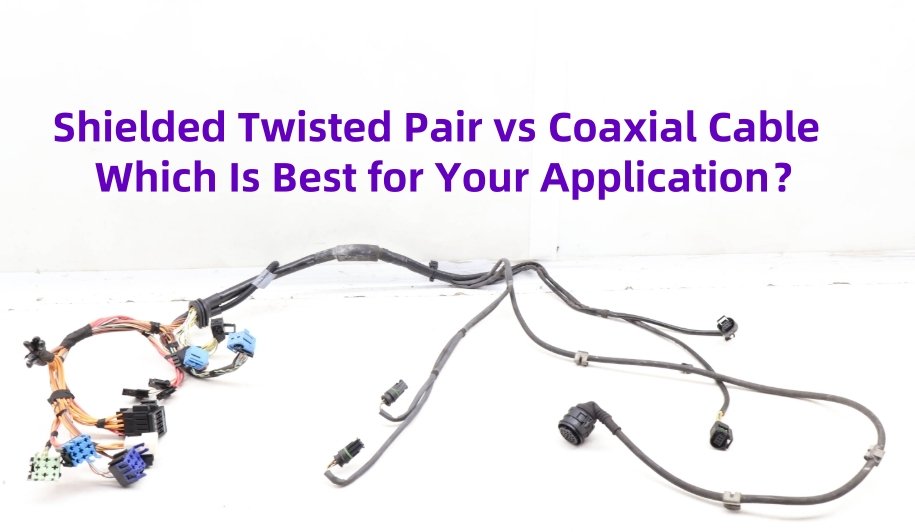
Choosing the right cable for signal transmission is more important than many people realize. I have seen firsthand how the wrong choice can lead to interference, unstable performance, or unexpected downtime. In systems that rely on clear and uninterrupted signals, this can quickly become a serious problem.
Two of the most common cable types I work with are Shielded Twisted Pair and Coaxial Cable. They are both designed to reduce noise and maintain signal quality, but they are built differently and serve different types of applications. Selecting the wrong one can affect everything from data accuracy to long-term reliability.
That is why I wrote this blog. My goal is to help you understand the key differences between Shielded Twisted Pair and Coaxial Cable so you can choose the one that fits your specific application. Whether you are planning a new installation or reviewing an existing system, this guide will give you the clarity you need.
What Is Shielded Twisted Pair (STP)?
To make an informed decision between cable types, I believe it is essential to first understand how each one is constructed and where it performs best. Let me start by breaking down Shielded Twisted Pair, often referred to as STP, which is widely used in environments where signal protection is a top priority.
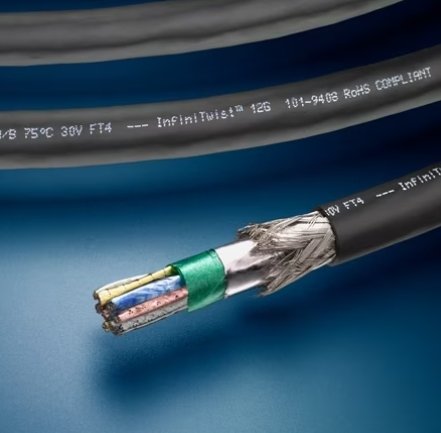
Shielded Twisted Pair (STP) cable consists of pairs of insulated copper wires twisted together, similar to unshielded twisted pair cables. However, what distinguishes STP is the additional shielding layer that surrounds each pair or the entire bundle of wires. This shielding acts as a protective barrier, minimizing external electromagnetic interference and preventing signals from leaking out or cross-interfering within the cable.
Common Shielding Types
The shielding used in STP cables can vary depending on the application and desired protection level:
- Foil Shielding: A thin layer of aluminum or similar metal foil wrapped around the wire pairs provides excellent high-frequency EMI protection.
- Braided Shielding: A mesh of fine copper or tinned copper wires woven around the pairs offers better durability and flexibility, along with interference reduction.
- Combination Shielding: Some STP cables use both foil and braided shields, combining the benefits of both for enhanced shielding effectiveness and mechanical strength.
Typical Applications
STP cables are commonly employed in environments sensitive to electrical noise or electromagnetic interference. They are well-suited for industrial control systems where numerous electrical devices operate simultaneously, and signal integrity is critical. STP is a popular choice for Ethernet networking in EMI-prone areas, such as manufacturing floors or data centers. Additionally, they are used in any application where reducing interference and maintaining clean, stable signals is paramount.
What Is Coaxial Cable?
Now that we have explored Shielded Twisted Pair, it is equally important to understand its counterpart, Coaxial Cable. I often come across situations where coaxial is the better choice, especially when dealing with high-frequency signals or video transmission. Knowing how it is built and how it functions will help you decide if it fits your application better than STP.
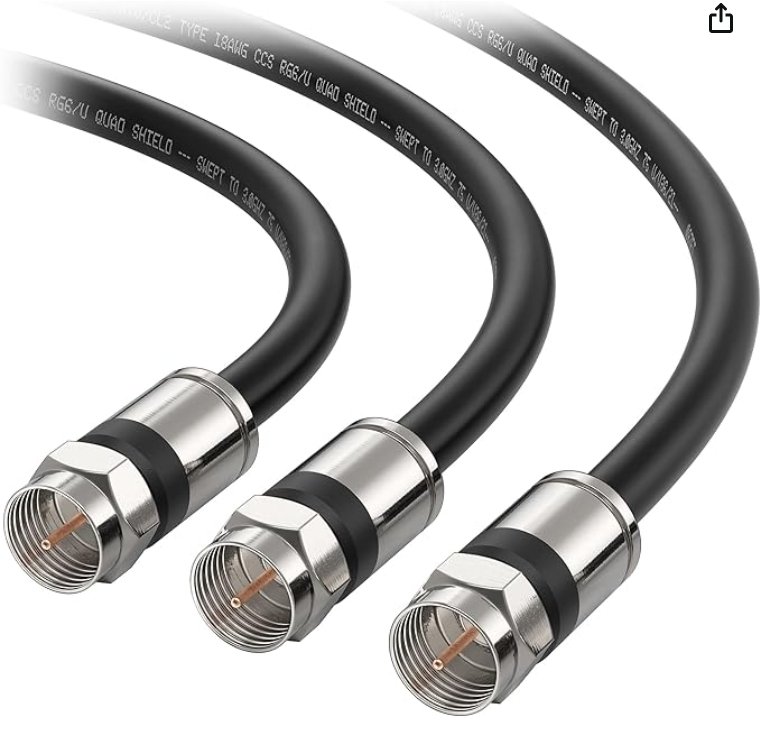
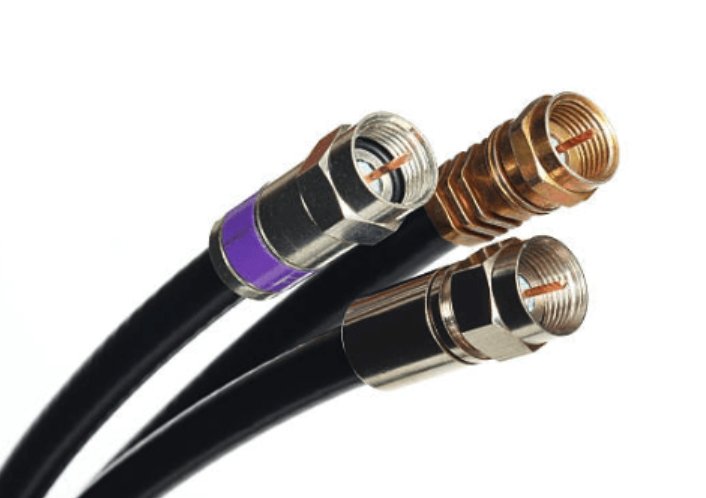
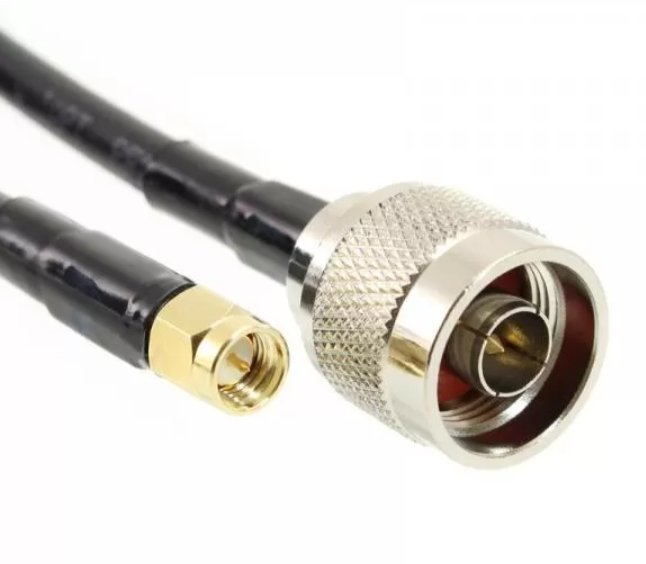
A coaxial cable consists of several key components arranged concentrically. At its core is a central conductor, typically a solid or stranded copper wire, which carries the electrical signal. Surrounding this conductor is a dielectric insulator, a non-conductive material that separates the central conductor from the shielding layers and maintains consistent spacing. The insulator is encased by a shield, usually made of braided copper, aluminum foil, or both, which serves to block external electromagnetic interference (EMI) and prevent signal leakage. Finally, the entire cable is protected by an outer jacket, a durable layer that shields the cable against physical damage and environmental factors.
How It Works for Signal Transmission
Coaxial cable transmits signals through the central conductor while the surrounding shield acts like a protective barrier against external noise and interference. The dielectric insulator keeps the central conductor and shield separated, preserving the cable’s impedance and ensuring consistent signal quality. This design creates a controlled electromagnetic field that enables high-frequency signals to travel with minimal attenuation and reduces the chances of interference from external sources or crosstalk.
Typical Applications
Coaxial cable is extensively used in a variety of applications where reliable high-frequency signal transmission is critical. It is commonly deployed in CCTV systems for video surveillance, providing stable and clear video signals over distances. The cable is also a standard in broadband internet and cable TV networks, delivering data and television signals with excellent fidelity. Moreover, coaxial cable plays a vital role in radio frequency communication, including antenna feeds and wireless transmission systems, due to its ability to efficiently carry RF signals while minimizing interference.
What Are the Key Differences Between STP and Coaxial Cables?
Now that we understand how both Shielded Twisted Pair and Coaxial cables are constructed and used, it becomes easier to compare them side by side. I often use the following key factors when helping customers decide which cable type suits their application best. Below is a clear breakdown of the main differences between STP and Coaxial cables:
| Feature | Shielded Twisted Pair (STP) | Coaxial Cable |
| Structure | Twisted pairs of wires with individual or overall shielding | Central conductor surrounded by dielectric insulator, shield, and outer jacket |
| Shielding Type | Foil, braided, or combination shielding around pairs or overall cable | Braided copper, foil, or combination shield surrounding the dielectric insulator |
| Signal Transmission | Differential signaling between twisted pairs, reduction of crosstalk | Single conductor signal with shield acting as ground and interference barrier |
| Frequency Range | Typically suitable for frequencies up to a few hundred MHz | Supports higher frequencies, often up to several GHz |
| Typical Applications | Ethernet networking, industrial control, EMI-sensitive environments | Cable TV, broadband internet, CCTV, RF communications |
| Flexibility and Size | More flexible and thinner, easier to install in tight spaces | Generally thicker and less flexible due to layered construction |
| Maximum Distance | Effective for shorter distances (up to ~100 meters for Ethernet) | Can transmit over longer distances with less signal loss |
| Cost | Usually lower cost for networking applications | Can be more expensive due to materials and construction complexity |
| Installation Complexity | Easier to terminate and install with standard connectors | Requires specialized connectors and tools for installation |
| Noise Immunity | Good EMI protection due to twisting and shielding | Excellent EMI protection due to robust shielding design |
This comparison highlights how the choice between STP and coaxial cable depends on your project’s frequency requirements, distance, flexibility, cost constraints, and specific application needs.
How to Choose: Factors to Consider Bewteen Shielded Twisted Pair (STP)?
With a clear understanding of how STP and Coaxial cables differ, the next step is knowing how to choose the right one for your specific application. I’ve helped many clients make this decision, and it always comes down to balancing performance needs, environmental factors, and long-term practicality. Below are 5keys factors I recommend you consider before making your final choice:
1.Type of Signal Being Transmitted
If you’re dealing with digital signals like Ethernet or data communication, STP is usually the better choice due to its balanced signal transmission and noise rejection. For analog signals or high-frequency transmissions such as video or radio frequencies, coaxial cable offers more stable performance and less signal loss.
2.Environment (Indoor, Outdoor, EMI Exposure)
In environments with high electromagnetic interference (EMI) like factories or near power equipment STP cables perform well due to their shielded twisted design. However, if you’re transmitting over long distances or in outdoor or exposed environments, coaxial cables are often preferred because of their robust 360° shielding and durability.
3.Required Distance and Data Speed
Coaxial cables are better suited for long-distance transmission and high-frequency signals, especially in RF or video systems. For short-to-medium distances with moderate to high-speed data, STP cables can deliver excellent performance, especially when paired with proper grounding and termination.
4.Budget and Maintenance
STP cables tend to be more cost-effective and easier to install and maintain, especially in structured cabling systems. Coaxial cables can be slightly more expensive due to their thicker construction and connectors, but may require less troubleshooting in high-frequency applications.
5.Application-Specific Needs
Consider your end-use:
- For data networking (e.g., Ethernet, industrial control): STP is typically ideal.
- For video transmission, RF, or broadband: Coaxial is usually the right fit.
- For custom applications with specific shielding, flexibility, or temperature requirements consulting with a wire harness expert can ensure optimal performance.
Application Suitability
After comparing the technical features and choosing factors, the next step is to match each cable type to its ideal use case. I always recommend selecting cables not only based on performance specs but also on how well they align with real-world applications. Understanding where Shielded Twisted Pair and Coaxial cables work best can save time, reduce installation issues, and ensure long-term reliability. Below are some of the most common and effective uses for each.
Best Use Cases for Shielded Twisted Pair Cables
STP cables excel in scenarios where interference mitigation and data integrity are critical within relatively short distances. They are commonly used in:
- Ethernet Networking: STP is popular for local area networks (LANs), especially in environments with moderate electromagnetic interference (EMI), such as office buildings and industrial facilities.
- Industrial Settings: Due to their robust shielding and flexibility, STP cables are ideal for industrial control systems, automation networks, and factory floor communications where electrical noise is prevalent.
- Audio/Video Applications: STP cables are often employed in professional audio and video systems, where clean signal transmission is essential, and interference must be minimized.
Best Use Cases for Coaxial Cables
Coaxial cables are favored in applications requiring high-frequency signal transmission over longer distances with superior shielding effectiveness. Typical uses include:
- Cable TV and Broadband Internet: Coaxial is the standard for television distribution and broadband connections, delivering consistent signal quality to homes and businesses.
- Radio Frequency (RF) Transmission: Coaxial cables are extensively used in RF applications, including antenna feeds, wireless communications, and satellite systems, due to their ability to carry high-frequency signals with minimal loss.
- CCTV and Surveillance Systems: Their robust performance over long cable runs makes coaxial cables suitable for closed-circuit television installations and video surveillance.
Industry-Specific Recommendations
Different industries have varying needs that influence cable choice:
- Telecommunications: Both cable types are used, but coaxial is often preferred for broadband infrastructure, while STP serves internal networking.
- Security Systems: Coaxial cables dominate in video surveillance; STP is used for data and control signals where EMI resistance is required.
- Automotive: STP is commonly applied for in-vehicle networking and sensor connections due to its flexibility and noise immunity.
- Renewable Energy and Industrial Automation: STP cables are favored for control systems requiring reliable data transmission in electrically noisy environments.
How to Making the Right Choice for Your Project
By now, you’ve seen that both Shielded Twisted Pair (STP) and Coaxial cables have their strengths but the best cable for your project depends on more than just technical specs. Over the years, I’ve learned that making the right choice involves balancing performance, cost, and long-term goals, while asking the right questions early on. Here’s how I guide clients through this decision.
1.Key Factors That Influence Cable Choice
Before selecting a cable, I recommend evaluating the following:
- Environment: Will the cable be exposed to EMI, heat, moisture, or mechanical stress? STP handles EMI well, while coaxial may offer better shielding in RF-sensitive zones.
- Budget: Consider both short-term installation costs and long-term maintenance. STP is generally more cost-effective, but coaxial offers durability for specific applications.
- Performance Needs: What signal type, speed, and frequency does your system require?
- Future-Proofing: Will your application evolve? Choose a cable that supports potential system upgrades without requiring a full replacement.
2.Decision-Making Tips & Questions to Ask Suppliers
Here are 5 useful questions I always suggest asking:
- What is the maximum frequency and distance this cable can support?
- Is the cable compliant with industry standards (UL, ISO, RoHS)?
- How does the cable perform in high-EMI environments?
- Can I get samples or test reports before placing a large order?
- Are custom configurations or harness assemblies available?
These questions help ensure that your supplier understands your needs—and can deliver more than just a standard cable.
3.When to Consider Hybrid or Alternative Solutions
In some cases, the answer isn’t either/or. If your application includes both digital and RF signals, or requires different cable characteristics across subsystems, you might need a hybrid cable assembly. For example:
- STP + Coaxial harnesses for automotive infotainment systems
- Shielded flat cables for compact environments
- Fiber optic options when EMI immunity and high bandwidth are critical
At Yihetai, we often help clients design these hybrid solutions, tailored exactly to the performance and layout requirements of their systems.
FAQ
1.Is coaxial cable better for high-frequency applications?
Yes, coaxial cable is generally better for high-frequency applications. Its design features a central conductor surrounded by a dielectric insulator and a robust shielding layer (often foil and braided metal), which maintains a fixed impedance and effectively blocks external electromagnetic interference. This construction allows coaxial cables to transmit high-frequency signals with greater stability, low signal loss, and reduced interference compared to other cable types such as twisted pair cables. Coaxial cables are widely used in applications like cable TV, broadband internet, and radio frequency communications because of their high-frequency transmission stability and low attenuation over longer distances.
2.Can I use STP cables for audio transmission?
Yes, Shielded Twisted Pair (STP) cables can be used for audio transmission and are often a good choice in environments where electromagnetic interference (EMI) might degrade signal quality. The shielding in STP cables helps block external noise, resulting in clearer audio signals with less interference. This makes STP suitable for professional audio systems, recording studios, and other scenarios where maintaining signal integrity is important.
STP cables offer stronger anti-interference capabilities compared to unshielded cables, making them well-suited for audio transmission in electrically noisy environments, such as industrial settings or near heavy machinery. Additionally, STP cables support longer-distance transmission with minimal signal loss, which can be beneficial in larger audio setups.
3.How do STP and coaxial cables handle electromagnetic interference (EMI)?
Shielded Twisted Pair (STP) and coaxial cables handle electromagnetic interference (EMI) differently through their unique constructions designed to minimize signal disruption.
Shielded Twisted Pair (STP)
STP cables consist of twisted pairs of wires surrounded by a shielding layer usually foil, braided metal, or a combination that acts like a Faraday cage. The twisting of the wires helps cancel out electromagnetic interference by ensuring that noise affects both wires equally, allowing the interference to be canceled out at the receiver. The shielding layer further protects against external EMI by blocking electromagnetic waves from penetrating the cable. For maximum effectiveness, the shield must be properly grounded to drain interference currents safely away. This makes STP cables well-suited for environments with moderate to high EMI, providing strong noise immunity and maintaining signal integrity over relatively short distances.
Coaxial Cable
Coaxial cables have a single central conductor surrounded by a dielectric insulator, which is then encased by a robust metallic shield (braided copper, foil, or both), and an outer protective jacket. The shield serves as a continuous conductive layer acting as a Faraday cage, which effectively blocks external electromagnetic fields from interfering with signals in the central conductor. The consistent spacing provided by the dielectric insulator helps maintain a stable impedance, further minimizing signal reflection and loss. This design grants coaxial cables superior EMI protection and the ability to transmit high-frequency signals over longer distances with low attenuation.Summary
Summary
- STP cables use twisted pairs plus shielding to reduce interference; twisting helps cancel noise, and the shield blocks external EMI.
- Coaxial cables employ a thick, continuous metallic shield and stable construction to provide stronger EMI protection, better for high-frequency and long-distance transmission.
Both cable types rely on shielding acting as a Faraday cage but differ in structure and application. STP is typically favored in networking and moderate EMI conditions, while coaxial excels in high-frequency, long-distance, and highly noisy environments. Proper grounding and installation are critical for maximizing EMI protection in both cable types.
4.Can I get custom STP or coaxial cable assemblies for my specific application?
Yes, you can definitely get custom Shielded Twisted Pair (STP) or coaxial cable assemblies tailored to your specific application needs. Many manufacturers specialize in custom cable assemblies, offering services that include designing, prototyping, and producing cables to your exact specifications. They can customize various aspects such as cable length, conductor sizes, shielding types, connectors, jacket materials, and more to ensure optimal performance for your project.
Custom cable assembly manufacturers typically work across diverse industries like industrial automation, telecommunications, medical, automotive, and more, providing cables designed to handle specific electrical, mechanical, and environmental requirements. They also offer quality testing, certification compliance, and support throughout the product lifecycle.
If you have a specialized application requiring unique cable characteristics, reaching out to experienced custom cable manufacturers will ensure you get a cable assembly that precisely meets your technical and operational needs. Many companies provide engineering collaboration and turnkey solutions to develop the best cable assembly for your situation.
5.How does the flexibility of shielded twisted pair cable compare to coaxial cable?
Shielded twisted pair (STP) cable is generally more flexible than coaxial cable. STP cables consist of two insulated wires twisted together with an additional shielding layer, making them thinner and easier to bend. This flexibility allows STP cables to be routed more easily through tight spaces and around corners, which is advantageous in complex installations or confined areas.
In contrast, coaxial cables have a thicker and more rigid construction due to their central conductor, dielectric insulator, and robust outer shielding. This multi-layer design makes coaxial cables less flexible and more difficult to bend, especially in tight spaces or for intricate routing.
Conclusion
After exploring the differences between shielded twisted pair and coaxial cables, I can confidently say that both have their place depending on the application. STP is ideal for data transmission in environments with moderate electromagnetic interference, such as Ethernet networks or industrial control systems. Coaxial cable is better suited for high-frequency signals, making it perfect for video surveillance, radio frequency systems, and broadband communication.
In my experience, the best cable is not about which one is better in general, but which one fits your specific needs. Factors like signal type, operating environment, distance, and budget all play an important role in the decision.
If you are still unsure which cable is right for your project, I recommend speaking with a cable harness expert. Making the right choice now can save time, cost, and technical issues later.
Feel free to contact Yihetai for professional advice or a custom cable quote tailored to your application.