
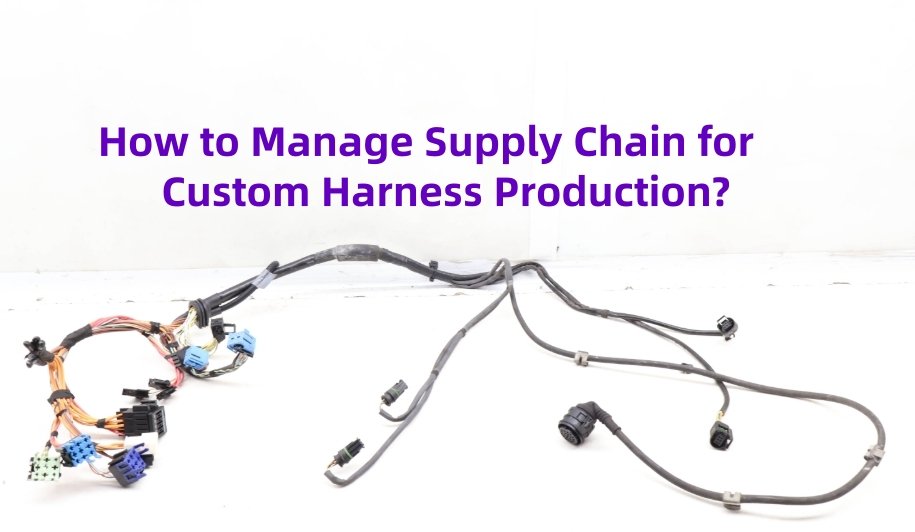
Managing the supply chain for custom harness production is very different from handling standard products. I have experienced situations where a single late delivery of a unique wire or connector caused serious delays across the entire project. In custom manufacturing, every harness is built to specific requirements, which means material sourcing and coordination must be handled with extra care.
If the supply chain is not properly managed, the results can be damaging. Production slows down, costs increase, and product quality may suffer. Worst of all, customers lose confidence when delivery timelines are not met.
That is why I always focus on building a strong and reliable supply chain. It plays a key role in maintaining product quality, controlling costs, and ensuring on-time delivery. In this blog, I will share how I manage each part of the process to keep everything running smoothly and efficiently from start to finish.
What Are The Unique Supply Chain Needs Of Custom Wire Harnesses?
Unlike standard off-the-shelf cable assemblies, custom wire harnesses require a much more dynamic and responsive supply chain. From my experience, the variety of designs, components, and industries involved means every project brings its own set of demands. Managing this process effectively requires careful planning, strong supplier coordination, and the ability to adapt quickly. Below are the unique supply chain needs I always consider when supporting custom wire harness production.
1.High Mix, Low to High Volume Production Challenges
Custom harness manufacturing often includes a wide range of product types with different specifications. One customer may need just a few prototype units, while another requires thousands for mass production. This high mix of part numbers combined with variable order volumes makes forecasting and planning more complex. The supply chain must be able to handle both small and large runs efficiently without compromising lead times or quality.
2.Custom Components, Varying Lead Times, and Material Availability
Many custom harnesses use nonstandard or specialized components such as unique connectors, overmolded parts, or rare cable types. These items often have longer lead times or limited availability in the market. It is critical to plan ahead and maintain close communication with suppliers to ensure that components are sourced on time. Delays in just one part can affect the entire production schedule.
3.Need for Flexibility and Traceability in Materials
Each harness may use different wire gauges, insulation materials, or shielding depending on the application. This requires flexibility in sourcing and inventory management. In addition, traceability is essential, especially for industries like automotive or medical, where every component must be tracked for compliance and safety. A reliable supply chain must provide full documentation and material traceability from the original source to the final product.
Why is supply chain management important in harness production?
Supply chain management is a critical aspect of harness production that directly influences the quality, cost, and timely delivery of the final product. Efficient supply chain management ensures that all necessary components and materials are sourced, transported, and integrated seamlessly, enabling manufacturers to meet production schedules and customer specifications without unnecessary delays or cost overruns.
Effective management of the supply chain helps mitigate risks associated with material shortages, supplier reliability, and logistics challenges, which are especially pronounced in harness production due to the complexity and customization involved. By optimizing procurement, inventory control, and supplier relationships, supply chain management plays a vital role in maintaining production continuity, enhancing product quality, and driving overall operational efficiency in harness manufacturing.
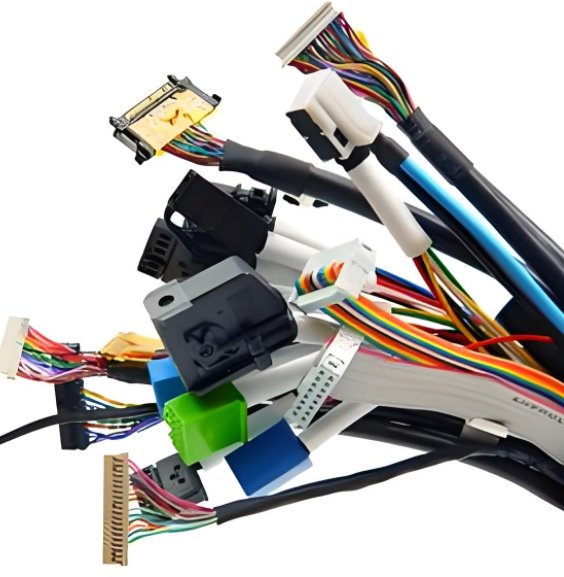
How To Build Strong Relationships With Key Suppliers?
Building strong relationships with key suppliers is essential for establishing a resilient and efficient supply chain, especially in custom harness production where quality, lead times, and flexibility are critical. Strong supplier partnerships foster collaboration, innovation, and mutual growth, enabling both parties to navigate challenges and optimize performance together.
To build and maintain these relationships, it’s important to:
- Develop open and transparent communication channels for sharing forecasts, challenges, and feedback.
- Prioritize supplier segmentation to focus efforts on strategic suppliers that have the greatest impact on your business.
- Implement regular performance reviews using key metrics to track quality, delivery, and responsiveness.
- Collaborate on problem-solving and continuous improvement initiatives to drive mutual efficiency gains.
- Establish trust through reliability, timely payments, and honoring agreements, which encourages suppliers to prioritize your orders.
- Engage suppliers early in product development to benefit from their expertise and innovation potential.
- Foster a partnership mindset that goes beyond transactional interactions to create long-term win-win outcomes.
- By investing in these practices, businesses can transform suppliers from mere vendors into strategic allies who contribute to supply chain agility, cost reduction, and product excellence.
How To Improve Material Planning And Forecasting Accuracy?
In custom harness production, accurate material planning is essential. I have seen how small forecasting mistakes can lead to production delays, rushed shipments, or costly material shortages. Because each harness is built to order and often includes a mix of custom parts, planning must go beyond basic estimates. To keep production running smoothly and customers satisfied, I focus on a few proven strategies that help improve forecasting accuracy and material readiness.
1.Managing Demand Fluctuations and Customer-Specific Requirements
Every customer has different needs. Some place regular high-volume orders, while others request small, urgent batches. To manage this, I work closely with customers to understand their long-term schedules and project cycles. By maintaining clear communication and tracking order patterns, I can prepare better for shifts in demand and ensure that critical components are always available.
2.Using Forecasting Tools to Reduce Delays and Shortages
I rely on forecasting tools and data analysis to plan ahead. These tools allow me to track usage history, seasonal trends, and upcoming project demands. With this information, I can identify which materials to order early and which to monitor closely. This reduces the risk of urgent last-minute purchases that slow down production and increase costs.
3.Balancing Between Stocking and Just-in-Time Supply
Holding too much inventory ties up resources, while holding too little increases the risk of delays. That is why I aim to strike the right balance between stocking essential materials and using just-in-time delivery for less critical items. For fast-moving or high-risk parts, I maintain buffer stock. For more stable components, I coordinate with suppliers to deliver as needed.
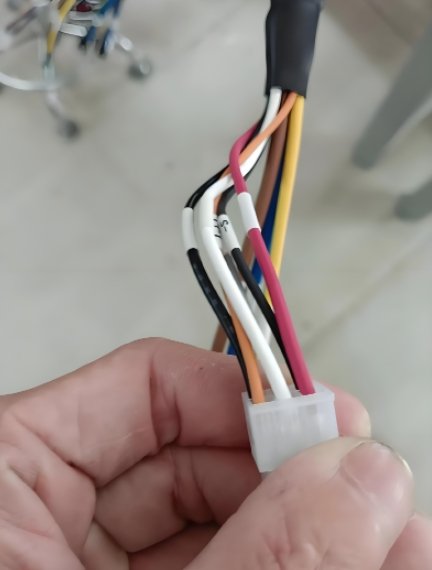
How To Optimize Inventory And Logistics In Manufacturing?
In custom wire harness manufacturing, smooth production depends heavily on how well inventory and logistics are managed. I have found that even with the best design and skilled workforce, operations can easily be delayed if materials are disorganized, tracking is unclear, or shipments are mismanaged. Optimizing inventory and logistics helps improve efficiency, reduce waste, and ensure that products are delivered on time. Here are several proven strategies I use to strengthen inventory and logistics management in the production process.
1.Best Practices for Raw Material Storage and Handling
Organizing raw materials properly is the foundation of efficient production. Cable reels, terminals, connectors, and insulation materials should be stored in clearly labeled areas based on size, type, and usage frequency. For example, cable reels should be stored in a way that prevents damage and allows easy access for cutting. Terminals should be kept in moisture-controlled bins to protect against oxidation. A well-organized storage area reduces picking errors and speeds up preparation for assembly.
2.Using ERP or MRP Systems for Tracking Inventory Levels
A good ERP or MRP system gives you real-time visibility of your inventory. I use these tools to monitor stock levels, track material usage, and plan reorders before shortages occur. The system also helps manage component traceability, which is especially important for certified harnesses. With clear inventory data, we can make faster decisions, prevent overstocking, and avoid costly last-minute purchases.
3.Managing Inbound and Outbound Logistics Efficiently
On the logistics side, both incoming material and outgoing product flows must be well coordinated. For inbound logistics, I work closely with suppliers to schedule deliveries that match our production schedule. This avoids crowding the warehouse or creating delays. For outbound logistics, proper packaging, labeling, and shipping documentation ensure that finished harnesses reach customers safely and on time. Partnering with reliable logistics providers also reduces the risk of damage or delivery errors.
At Yihetai, we apply all of these methods to keep our material planning accurate and responsive. Whether working with long-term customers or new projects, we make sure that every component is available when needed without wasting resources or time.
How To Develop Effective Risk Management And Contingency Plans?
In custom harness manufacturing, I have learned that unexpected problems can happen at any time. A delayed shipment, a sudden shortage of raw materials, or a disruption at a supplier’s facility can all affect production schedules and customer commitments. That is why I always make risk management a core part of my supply chain planning. By preparing for possible problems before they happen, I can protect production timelines and maintain customer trust.
Identifying Risks: Raw Material Shortages, Shipping Delays, Supplier Disruptions
The first step I take is identifying all possible risks. These include limited availability of custom connectors or cables, international shipping delays, or sudden changes in a supplier’s capacity or performance. I also look at seasonal demand changes, regulatory issues, and potential quality problems. Understanding where the risks are helps me take action early and avoid serious disruptions later.
Creating Backup Sourcing Plans and Alternative Suppliers
Once I know the risks, I work on building backup plans. For critical components, I always try to qualify at least one alternative supplier. This allows me to switch sources quickly if needed. I also stay in regular contact with these backup suppliers so they are familiar with our needs. In some cases, I work with suppliers to keep a small volume of priority materials available just in case of emergency.
Buffer Stock Strategies and Lead Time Management
To further reduce the impact of supply chain issues, I maintain buffer stock for high-risk or long-lead-time items. This safety stock gives me extra time to react if there is a disruption. I also review lead times regularly and build extra time into the schedule for critical parts. This helps ensure that even if one part is delayed, the entire project does not stop.
At Yihetai, we apply these risk management strategies to every custom harness project. With a proactive approach and strong supplier partnerships, we help ensure that even when problems arise, we are ready to respond without sacrificing quality or delivery.
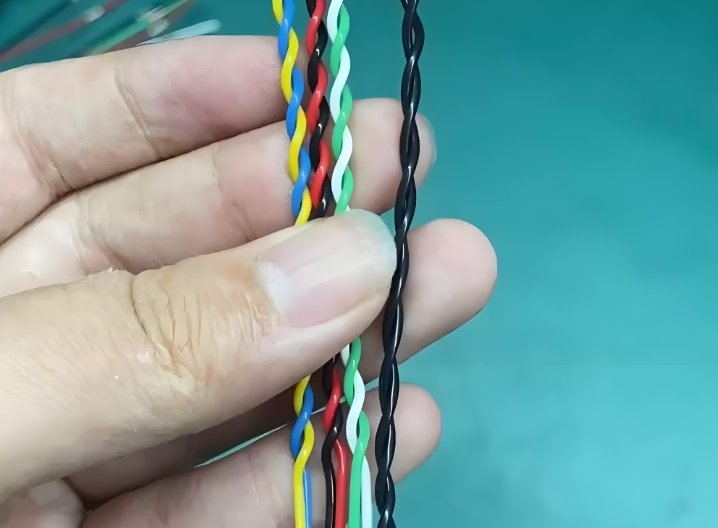
How To Ensure Quality Assurance Throughout The Supply Chain?
In my experience with custom harness production, I have learned that quality starts long before assembly begins. It starts with the materials we receive, the suppliers we choose, and the processes we follow from beginning to end. A single low-quality component can lead to product failure, customer complaints, or even safety issues. That is why I believe in building a strong quality assurance system across the entire supply chain not just on the production floor, but at every step.
Incoming Inspection of Materials
To ensure quality from the start, I always carry out inspections as soon as materials arrive. This includes checking wire specifications, terminal dimensions, insulation condition, and supplier labels. For critical parts, I use tools to test insulation resistance and conductivity. By catching problems early, I can prevent delays and avoid introducing defects into the assembly process.
Maintaining Traceability of Components Throughout the Process
Traceability is one of the most important tools for managing quality. I assign tracking codes to each batch of materials and log their use in production. This allows me to trace any issue back to its source if a problem is found later. It also helps with warranty claims, audits, and compliance with industry standards in sectors like automotive, medical, or aerospace.
Partnering Only with Certified and Audited Suppliers
A key part of quality assurance is working only with trusted suppliers. I make sure that all of our key suppliers are certified under systems like ISO 9001 or IATF 16949. I also review their quality records and, when possible, visit their facilities or request third-party audit reports. This gives me confidence that the materials they provide meet our standards before they even arrive at our facility.
Managing Compliance Documentation and Regulatory Requirements
In custom harness production, quality assurance also depends on strong control of compliance documents and regulatory requirements. From my experience, it is not enough to receive the right materials on time. We must also ensure that suppliers can provide complete documentation such as RoHS, REACH, UL certifications, material declarations, and batch records when required. Keeping these documents organized and updated helps us pass customer audits more efficiently, reduces compliance risks, and gives customers greater confidence in the safety, consistency, and reliability of the final harness product.
How To Improve Collaboration Between Supply Chain And Engineering Teams?
In custom harness manufacturing, I have found that one of the most important ways to improve efficiency and reduce delays is by strengthening the connection between the engineering and supply chain teams. These two departments often work toward the same goal but from different perspectives. When they operate in isolation, it can lead to missed details, material issues, or late design changes that impact the entire production schedule. To avoid these challenges, I focus on building a collaborative process where both teams support each other from the very beginning of a project.
Effective collaboration between supply chain and engineering teams is crucial for streamlining product development and manufacturing processes, especially in custom wire harness production. When these teams work closely together, they can optimize design choices, improve sourcing strategies, and reduce costly delays or rework, ultimately enhancing product quality and speed to market.
1.Importance of Design for Manufacturability (DFM) in Sourcing:
Engineering teams should integrate DFM principles early in the design phase to ensure that products are easier and more cost-effective to manufacture and source. This approach minimizes complexity, leverages standard components, and aligns design with available supply chain capabilities, reducing procurement challenges and production bottlenecks.
2.Coordinating on Custom Connector Design or Alternative Material Selection:
Close cooperation enables the engineering team to consult with supply chain professionals about component availability, cost, and lead times. This coordination allows sourcing teams to suggest alternative connectors, cables, or materials that meet design requirements while optimizing supply continuity and cost efficiency.
3.Reducing Design Changes That Affect Material Planning:
Frequent design revisions can disrupt material planning and procurement schedules, causing delays and extra costs. Establishing structured communication and change management processes helps synchronize design updates with supply chain adjustments, ensuring smoother transitions and stable inventory levels.
How Can Digital Tools And Automation Improve Supply Chain Efficiency?
In my experience managing custom harness production, I have seen how digital tools and automation can transform the entire supply chain process. Manual tracking, spreadsheets, and scattered communication often lead to delays, errors, and missed opportunities. But when we use the right digital systems, we gain visibility, control, and speed. These tools help me make faster decisions, reduce waste, and deliver more consistent results to customers.
Digital tools and automation have transformed supply chain management by enhancing visibility, coordination, and decision-making speed. These 3 technologies bring greater efficiency and agility, which are especially valuable in complex manufacturing environments.
1.Use of ERP Systems for Procurement and Tracking:
Enterprise Resource Planning (ERP) systems integrate all key supply chain functions—planning, procurement, inventory management, manufacturing, and logistics—into a single platform. This centralized data repository enables real-time tracking of orders, material availability, and supplier performance. Automated workflows streamline purchasing processes and reduce manual errors, ensuring timely procurement and optimal inventory levels.
2.Digital Supplier Collaboration Platforms:
These platforms facilitate seamless communication and collaboration between retailers, manufacturers, and suppliers. By sharing forecasts, production schedules, and quality data digitally, all parties can better coordinate efforts, resolve issues promptly, and adapt to changes quickly. Enhanced transparency helps build trust and aligns expectations across the supply chain.
3.Real-Time Monitoring and Analytics for Better Decision-Making:
Advanced analytics tools coupled with real-time data collection from IoT devices, sensors, and ERP systems enable early identification of bottlenecks, demand fluctuations, or supply disruptions. Data-driven insights support proactive risk mitigation, performance optimization, and continuous improvement initiatives, leading to more agile and resilient supply chains.
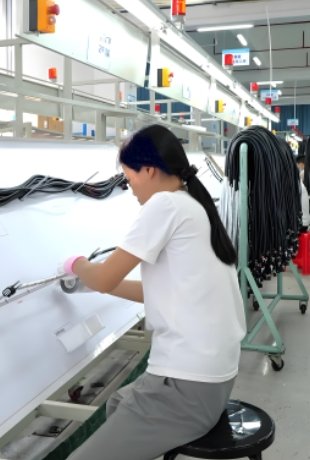
How does Yihetai manage sourcing and procurement for custom harness projects?
At Yihetai, I manage sourcing and procurement for custom harness projects with a strong focus on quality, speed, and flexibility. Because every project is different, our approach must be both structured and adaptable. Here is how we do it:
1.Clear Understanding of Project Requirements
Before we source any materials, I work closely with our engineering and sales teams to fully understand the customer’s technical and production needs. This includes connector types, cable specs, insulation materials, and environmental conditions such as moisture or heat exposure.
2.Strategic Supplier Selection
We only work with qualified, certified suppliers who meet our standards. Many of our suppliers are long-term partners with proven performance in automotive, industrial, medical, and energy sectors. We prioritize suppliers with ISO 9001, IATF 16949, and UL certifications to ensure consistent quality.
3.Custom Component Sourcing
For unique harness designs, we support custom connector sourcing or even custom-molded parts. I often coordinate with multiple vendors to compare lead times, pricing, and tooling options to ensure the best solution for each project.
4.Lead Time Management and Forecasting
We actively track lead times for critical components and maintain safety stock for high-risk items. Using forecasting tools, I prepare for demand spikes and reduce the risk of delays during production.
5.Procurement Through ERP System
Our procurement is managed through an ERP system that allows real-time tracking of materials, from order placement to warehouse delivery. This ensures accuracy, transparency, and full traceability of every component used in a wire harness.
6.Cost Control and Flexibility
We balance cost-efficiency with quality by comparing multiple sources when needed and negotiating favorable terms based on volume. At the same time, I stay flexible to respond to urgent customer changes or engineering updates.
7.Regular Supplier Evaluation
We regularly evaluate supplier performance based on on-time delivery, quality inspection results, and service response. If a supplier underperforms, we activate backup sourcing plans to ensure the project stays on track.
Conclusion
After working on many custom harness projects, I have learned that strong supply chain management is not optional. It is essential. From sourcing materials to meeting delivery deadlines, a stable supply chain supports everything that matters in a successful production process. Without it, costs rise, delays happen, and product quality is put at risk.
My advice is simple. Always work with a manufacturing partner who understands your needs and can support you through every stage. The right partner will help you avoid shortages, manage quality, and keep your production on schedule.
If you are planning a custom harness project and want support you can count on, I encourage you to contact us at Yihetai. We have the experience, equipment, and systems to help you manage your supply chain with confidence. Let us work together to create solutions that deliver results.
Read more: How to Manage Supply Chain for Custom Harness Production?